All Pro Now moves freight for businesses across Ohio, Michigan, Pennsylvania, Indiana, Northern Kentucky and Florida. Shippers in those states ask us one question often. Which LTL trucking companies deserve your freight? This guide compares the major carriers, explains pricing, and shows how to match a carrier to your lanes.
Less-than-truckload (LTL) moves shipments of roughly one to six pallets. Carriers combine freight from many customers on shared trailers. You pay for the space you use, not the whole truck. The American Trucking Associations (ATA) reports that trucks delivered more than 72% of all U.S. domestic freight tonnage in 2024. You can find the full numbers in ATA’s American Trucking Trends release.
Key Takeaways
- The best-known national LTL trucking companies include FedEx Freight, Old Dominion, XPO, Saia, Estes, ABF, TForce and R+L Carriers.
- Regional LTL carriers often deliver faster inside a few states.
- Your quote depends on origin, destination, weight, freight class or density, and accessorial fees.
- Since July 19, 2025, many commodities are classified by density, so measure every shipment.
- Ask each carrier about terminal coverage, claims handling, accessorial fees and peak-season capacity.
- Rankings change yearly, so verify revenue lists before you commit.
What Are LTL Trucking Companies and How Do They Work?
LTL trucking companies are motor carriers that move partial loads through shared terminal networks. Local drivers pick up pallets from several shippers. The freight returns to a terminal, where crews cross-dock it and load it onto linehaul trucks. Another terminal breaks the load down for final delivery.
That model costs less than a dedicated trailer for partial loads. It is also on demand. You skip the capacity hunt that truckload requires. For a deeper primer, read our guide on what LTL freight is.
An LTL common carrier offers its services to the general public at published rates. Most LTL carriers publish tariffs, fuel tables and accessorial rules. Those documents matter more than the headline discount you hear on a sales call.
Top LTL Trucking Companies in the USA
Industry reviewers keep naming the same core group. These LTL freight carriers run national or multi-region networks. The table below shows where each one is based.
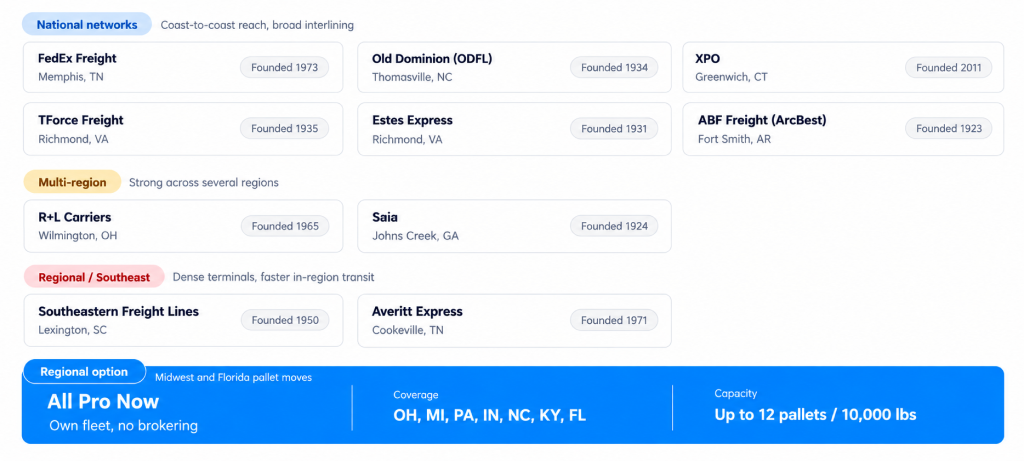
Yellow Trucking shut down in 2023. Other carriers absorbed its freight and many terminals. The lesson is simple. Never depend on one carrier for every lane.
Driver chatter on Reddit adds color. Many drivers praise Old Dominion and Estes. Some say Saia micromanages through driver-facing cameras. These are opinions, not audits. Still, they hint at service culture.
Top LTL Carriers by Revenue and Size
Many searchers want the top 10 LTL carriers by revenue. Rankings shift every year. Transport Topics publishes an annual Top 100 For-Hire Carriers list with an LTL sector. The 2026 edition ranks carriers by 2025 revenue and estimates figures for private carriers like R+L and Central Transport.
Context matters. Transport Topics found that a clear majority of Top 100 carriers earned less revenue in 2025 than the year before. Its analysis of the freight upturn adds more detail. Demand is now recovering. ATA’s for-hire tonnage index rose 2.1% year over year in February 2026, according to Logistics Management.
Use revenue as a stability signal. Do not treat it as a service score. A larger carrier usually has more terminals. Service quality can still vary by region.
[Image alt: Chart comparing top LTL trucking companies by size and network coverage]
Regional LTL Carriers vs. National Networks
Regional LTL carriers cover a smaller footprint with denser terminals. National LTL trucking companies cover long hauls and offer interlining. Interlining means one carrier hands freight to a partner, yet you still get one bill and one tracking number.
| Factor | Regional LTL | National LTL |
| Coverage | A few states | Coast to coast |
| In-region transit | Often faster | Varies by terminal |
| Interlining | Limited | Broad |
| Best for | Frequent short-haul lanes | Long-haul, multi-state freight |
| Examples | Dayton Freight, Pitt Ohio, Averitt | FedEx Freight, ODFL, XPO |
Here is a practical rule. If most freight stays in Ohio, Michigan, Pennsylvania and Indiana, shortlist a regional carrier. Coast-to-coast freight favors a national network. Many shippers use both. Our roundup of logistics companies in Ohio shows local options.
Origin matters too. A pickup in downtown Columbus costs less to serve than a rural site far from a terminal. Carriers price that distance into your rate.
How LTL Pricing Works
Four inputs start every quote. They are origin ZIP, destination ZIP, freight class and weight. The carrier looks up a rate per hundred pounds. Heavier shipments earn a lower rate per hundredweight. That rate times total weight gives your base charge.
Classification changed recently. The NMFTA says its Docket 2025-1 changes took effect July 19, 2025, replacing an 11-sub density scale with a 13-sub scale and moving over 2,000 items to full density-based classification. Read the coverage at DC Velocity. Weigh and measure every handling unit. Guesswork now costs more.
| Cost Driver | What It Means | Shipper Tip |
| Freight class/density | NMFC class set by density, handling, stowability, liability | Measure each pallet’s weight and dimensions |
| Weight break | Rate per hundredweight drops as weight rises | Consolidate small orders |
| Origin and destination | ZIP-to-ZIP lane and terminal distance | Ship from metro pickup points |
| Absolute minimum charge (AMC) | Lowest price a carrier will accept | Combine tiny shipments |
| Fuel surcharge | Percentage added to the base charge | Compare fuel tables, not just discounts |
| Accessorials | Liftgate, inside, residential, limited access, appointment | Pay only for services you use |
The AMC deserves attention. It sets a floor, and fuel is added on top. Small shipments often land there. Learn more in our explainer on fuel surcharges.
Density rules also reward smart packaging. Trailers usually fill by space before they hit legal weight. In a podcast interview, MyCarrier co-founder Chris Shy said you pay for the space you occupy. Smaller, tighter pallets can cut costs.
How to Choose Among LTL Trucking Companies
Follow these steps before you tender freight.
- Map your lanes: List your top pickup and delivery ZIP codes. Check terminal coverage near each.
- Pick service levels: Compare standard and guaranteed options. Know which customers require appointments.
- Compare tariffs, not just discounts: Ask for the accessorial schedule, fuel table and AMC. Our freight shipping quote guide explains what to request.
- Verify credentials: Look up each carrier’s DOT and MC numbers on the FMCSA SAFER system. Ask for claims ratios and references.
- Clean up your paperwork: Shy said carriers attribute about half of billing errors to unreadable bills of lading. Print them or use an electronic BOL.
- Build in lead time: Check realistic freight shipping times before you promise a date. Big-box retailers limit delivery appointments.
- Warn carriers about peaks: Peak season ramps up in August and runs hardest in October. Share forecasts early.
Smaller companies can start with our list of freight carriers for small businesses. These steps apply to every one of the LTL shipping companies you evaluate.
Which Industries Depend on LTL Freight Services?
Manufacturing leans on LTL every day. Detroit and Toledo suppliers move parts between plants. Cleveland, Akron, Canton and Youngstown fabricators ship components in small lots. Columbus retailers and e-commerce sellers replenish stores a few pallets at a time.
Medical facilities in Pittsburgh need scheduled, traceable deliveries. Construction firms in Northern Kentucky and Florida move fixtures to job sites. Each industry values something different. Manufacturers want predictable transit. Retailers want appointment accuracy.
Reliable LTL freight services also protect you from chargebacks. One missed retail delivery can erase months of savings. See how retail replenishment works in practice.
Where All Pro Now Fits Among LTL Trucking Companies
All Pro Now is not a national network. It is a regional option for LTL freight. According to its published service details, it runs its own fleet and does not broker freight.
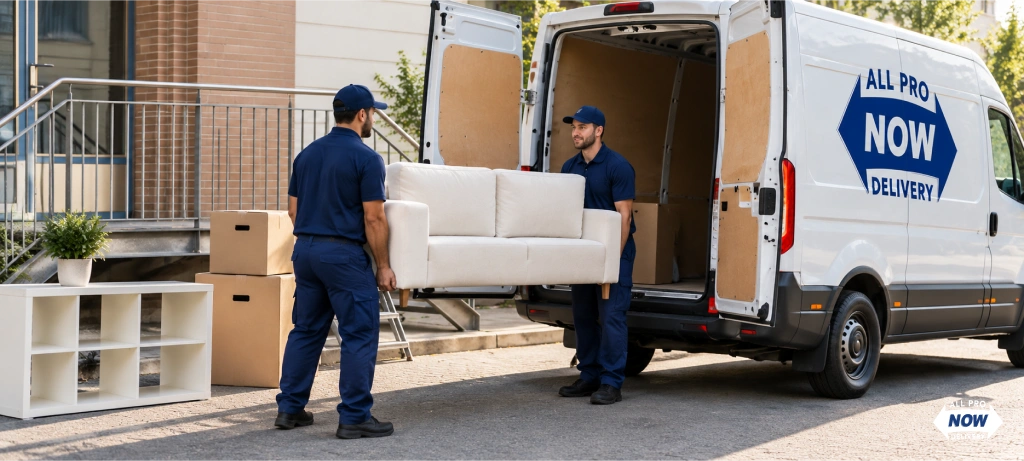
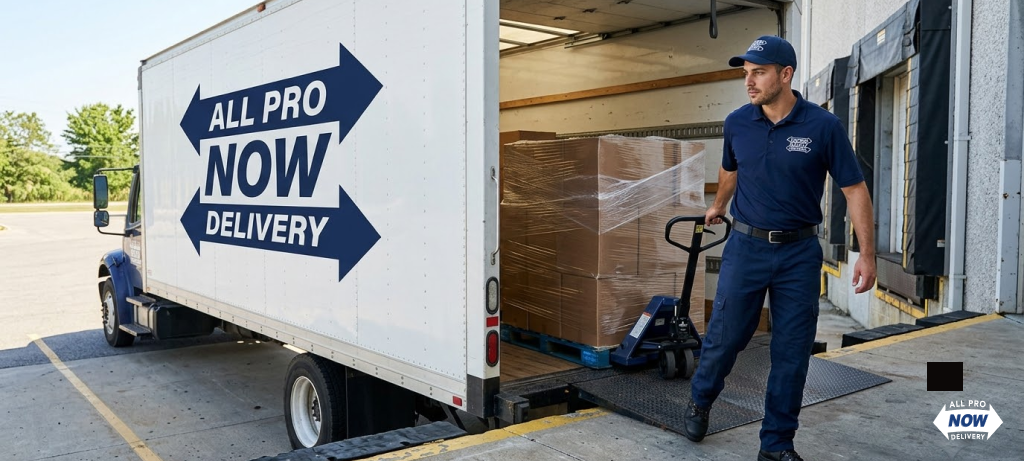
Capacity is clear. Sprinter vans carry up to 3,600 pounds and four standard pallets. Box trucks carry up to 10,000 pounds and 12 standard pallets. Both suit small LTL moves between metro areas.
Coverage spans Northeast Ohio, Columbus, Toledo, Akron/Canton and Youngstown. It also includes Detroit, Pittsburgh and Western Pennsylvania. Review the full service area for details. State pages cover Ohio, Michigan, Pennsylvania and Florida.
Pricing is a key difference. All Pro Now’s published comparison lists fuel surcharges of 0–7% versus an 18–50% industry average. It labels this as based on public national benchmarks. Actual rates vary by lane, weight and timing.
Trust signals matter. The company lists DOT 3463495 and MC 1131330. It also earned the 2025 Acuity Insurance Outstanding Safety Performance Award. Shipments include live tracking and digital proof of delivery.
Be realistic about fit. Shipments above 10,000 pounds or 12 pallets belong with a national carrier or truckload. For regional pallet moves, a local fleet can simplify things.
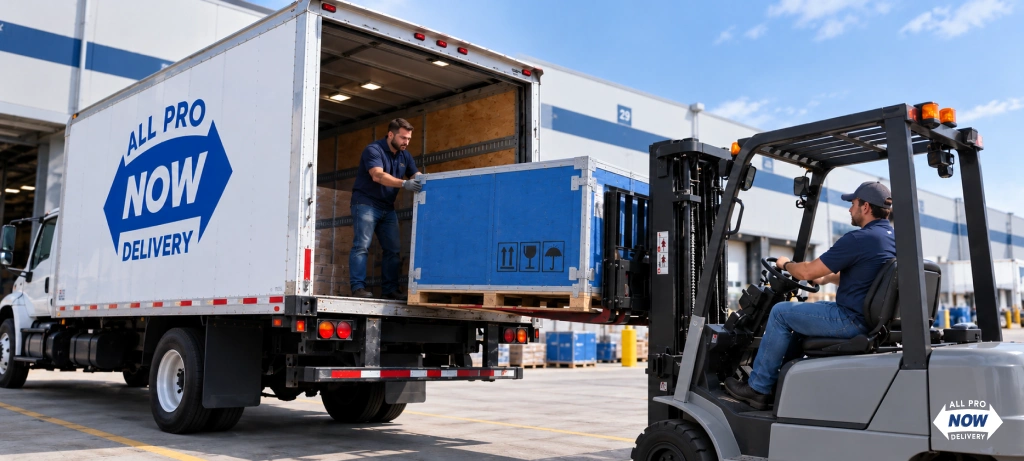
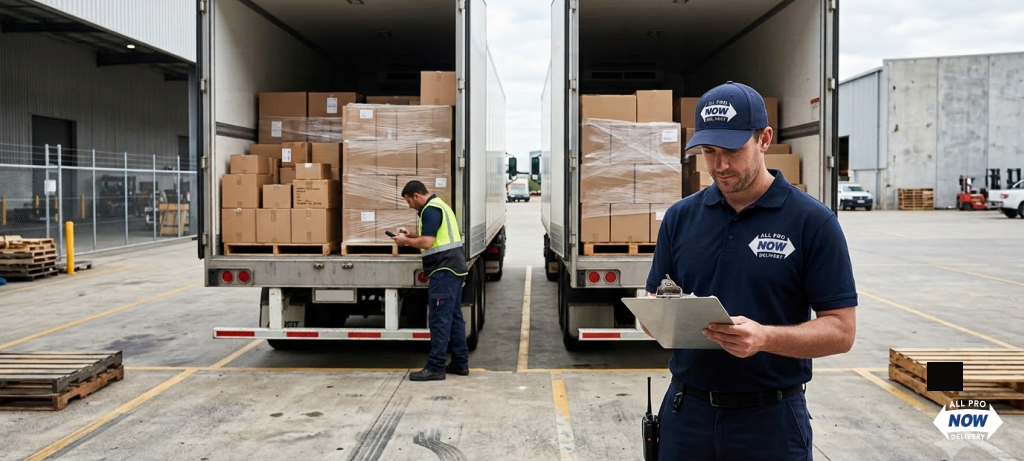
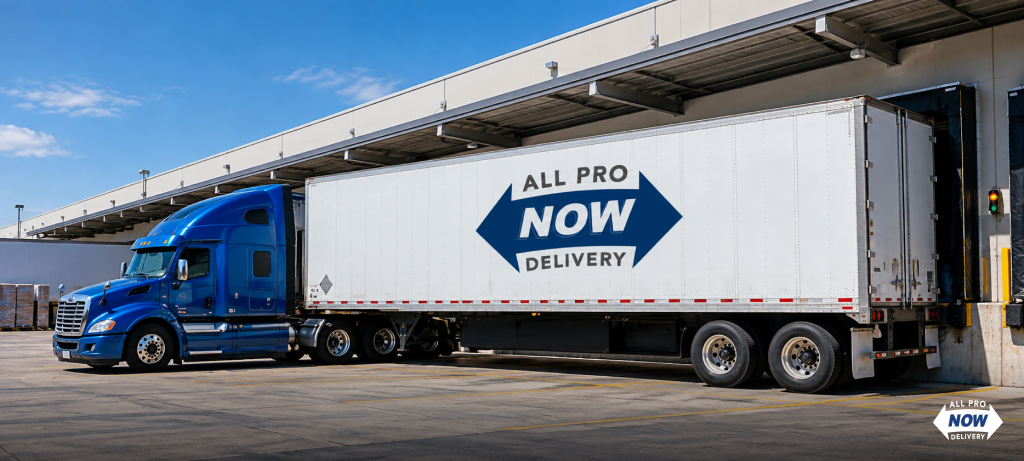
[Image alt: Sprinter van and box truck loading pallets for regional LTL trucking companies in Ohio]
Final Thoughts on Choosing LTL Trucking Companies
The best LTL trucking companies fit your lanes, freight and delivery rules. Start with your ZIP codes. Measure your freight. Compare tariffs and accessorials. Plan peak season early.
Then test your shortlist with real quotes. Mix national and regional carriers if your network demands it. Review performance every quarter.
Ready to compare LTL trucking companies for your Midwest or Florida lanes? Get an instant ZIP-to-ZIP estimate on allpronow.net. You can also talk to a logistics expert before your next peak-season shipment.