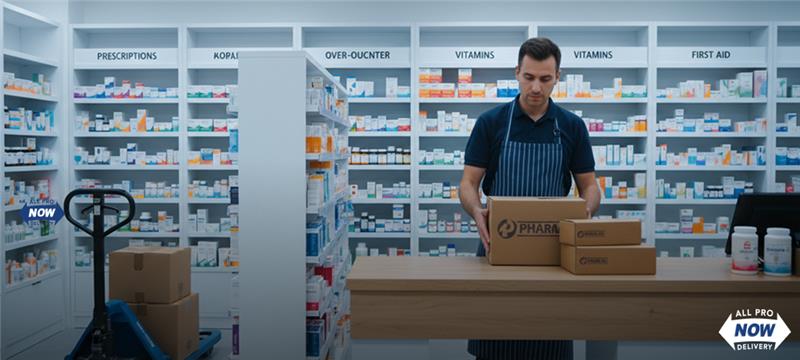
If you’re managing a retail operation, running a distribution center, or keeping a manufacturing-adjacent supply chain moving, you already know what a broken retail replenishment process costs. It’s not just a missed sale; it’s a customer who went elsewhere, a production line that stalled, a pharmacist who couldn’t fill a prescription on time.
According to IHL Group’s 2025 Inventory Distortion Report, the global retail industry loses $1.73 trillion annually from out-of-stocks and overstocks combined, with North America alone accounting for $415 billion of those losses. For businesses across Ohio, Michigan, Indiana, Pennsylvania, Kentucky, and Florida, the last-mile leg of replenishment is where plans either hold or fall apart and it’s the problem, AllProNow has spent over 50 years helping manufacturers, distributors, and retailers across the Midwest and Florida solve.
This blog covers the operational fundamentals you need to tighten your retail replenishment process from forecast to front shelf.
What Replenishment Meaning in Retail Looks Like on the Ground
Replenishment meaning in retail is: deciding when to order, how much to order, where to send it, and how fast to get it there; simultaneously, across multiple SKUs and locations, while demand signals keep shifting. A hardware distributor in Cleveland managing 3,000 SKUs across six locations is not running the same operation as a regional pharmacy chain with medication availability requirements.
Both share the same core problem: inventory that isn’t where it needs to be, when it needs to be there, creates downstream failures that are expensive to recover from.
The scale is significant. IHL Group’s research shows out-of-stocks alone account for $1.2 trillion in annual retail losses globally, with supply chain disruption contributing $301 billion of that figure. That’s not a forecasting problem in isolation; it’s a system problem, and the fix has to be systematic.
The Retail Replenishment Process, Stage by Stage
A sound retail replenishment process is a repeatable system with six interdependent stages. Miss one and the downstream stages absorb the cost.
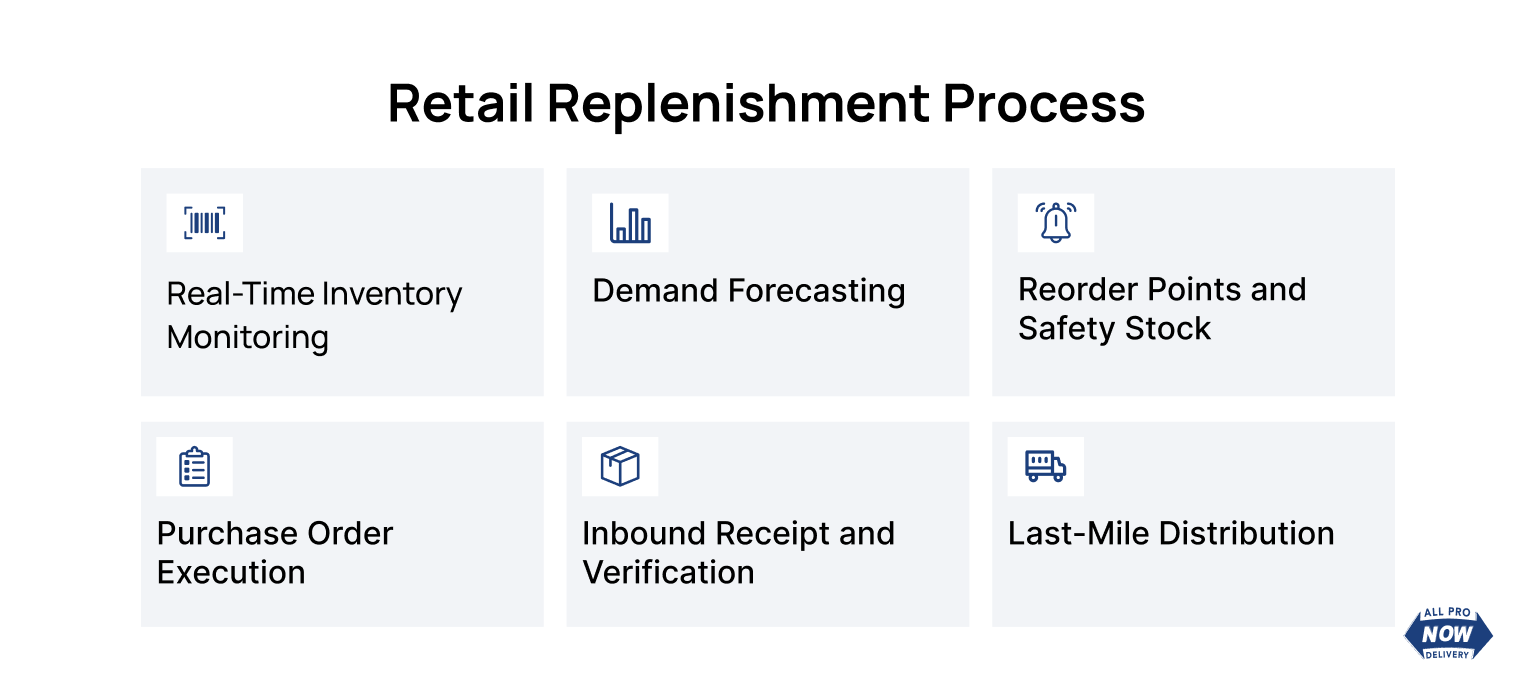
Stage 1: Real-Time Inventory Monitoring. Every replenishment decision starts with accurate stock data. Businesses in Akron, Columbus, and Detroit running manual counts are almost always operating on a 24–72 hour data lag, which means ordering too early and tying up cash, or ordering too late and stockouting.
Stage 2: Demand Forecasting. Historical sales, seasonality, local events, and promotional calendars all feed the forecast. A construction materials supplier in Toledo can anticipate demand surges following permit activity in surrounding counties. A medical supply distributor in Pittsburgh knows which products spike during flu season. McKinsey data shows top-performing retailers achieve 85–90% forecast accuracy, a standard that requires integrated data, not manual estimation.
Stage 3: Reorder Points and Safety Stock. Your reorder point triggers a purchase order automatically when stock hits a defined threshold. Safety stock covers demand spikes or supplier delays. Too low and you stockout; too high and you’re holding working capital in inventory you don’t need.
Stage 4: Purchase Order Execution. ERP-integrated systems generate and route POs without manual initiation. The more your process depends on someone remembering to check stock levels, the more exposure you carry.
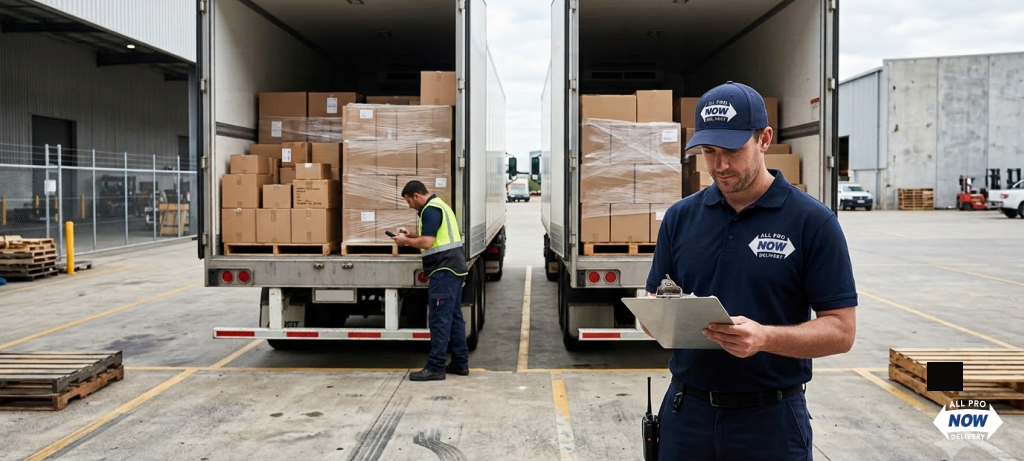
Stage 5: Inbound Receipt and Verification. Quantities get verified against the PO, condition gets checked, and the system updates immediately. Discrepancies caught at receiving are manageable. Discrepancies discovered when a store in Youngstown calls asking where their stock is are not.
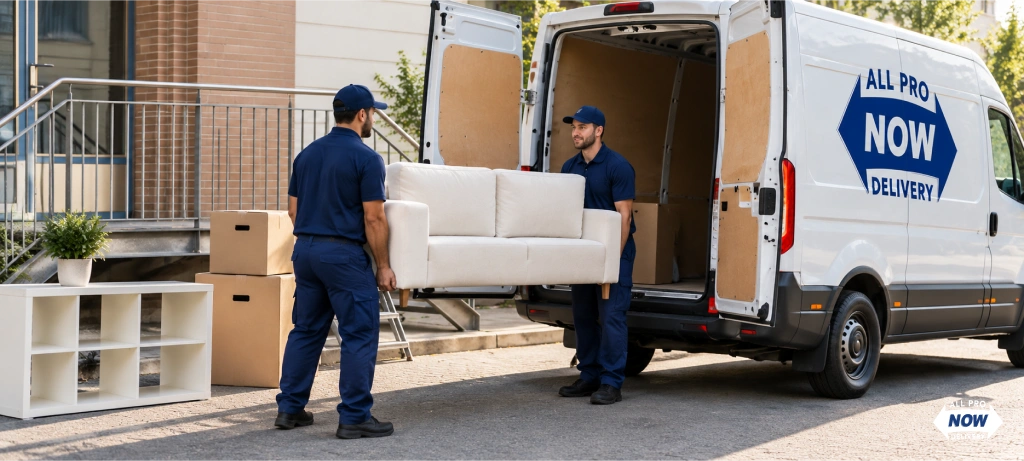
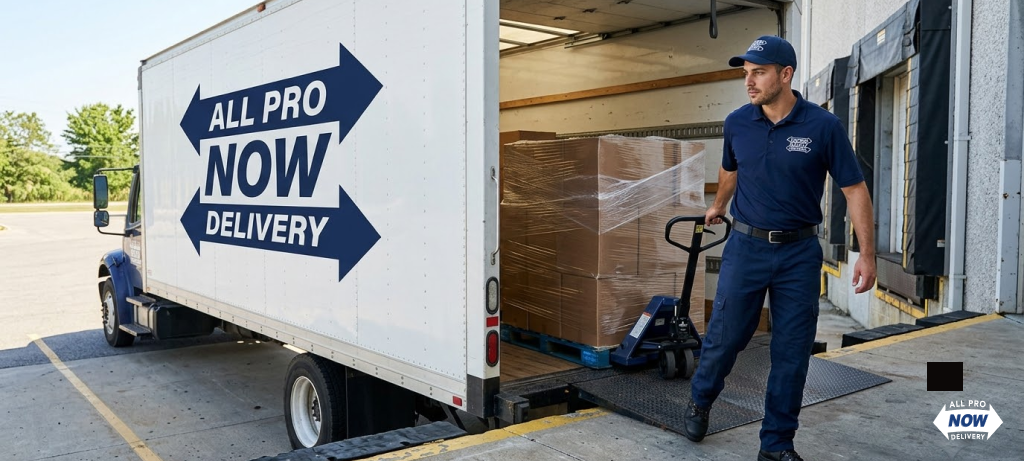
Stage 6: Last-Mile Distribution. For multi-location operations, distributors across Northeast Ohio, manufacturers restocking accounts in Indiana and Michigan, retailers splitting shipments across Pittsburgh and Northern Kentucky; this is where the retail replenishment process either succeeds or breaks down. The freight partner handling this leg needs to be reliable on time-critical schedules, not a gig platform whose driver availability varies by the hour.
Retail Replenishment Types: Matching the Method to the Product
Understanding retail replenishment types lets you apply the right method to each product category rather than managing all inventory under a single approach that fits nothing perfectly.
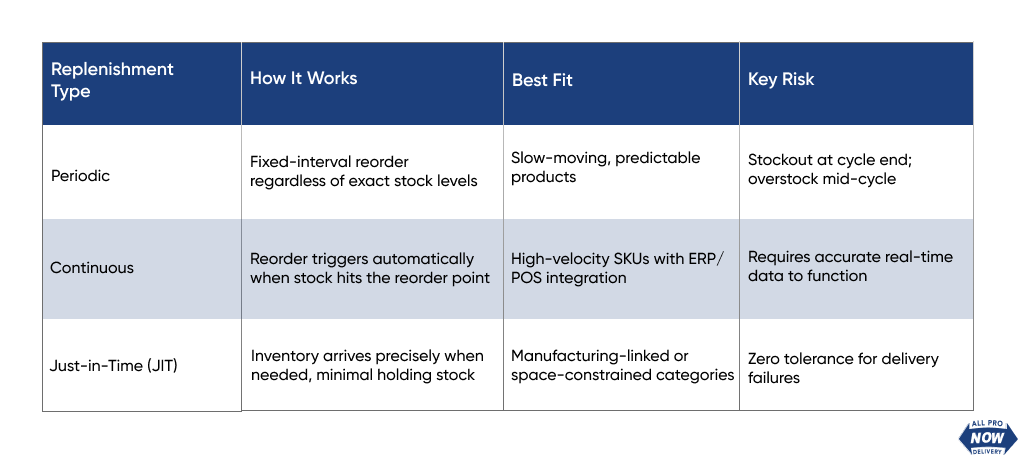
Most operations blend all three. High-velocity A-items run continuous replenishment. Slow-moving C-items operate on periodic cycles. JIT applies where carrying costs make holding stock prohibitive, but it has zero tolerance for delivery failures. McKinsey’s 2025 supply chain survey shows 45% of leaders facing tariff pressures are increasing inventories as a mitigation measure, creating direct tension against JIT discipline.
The businesses navigating this well apply JIT selectively to SKUs with the most reliable delivery performance and build modest safety buffers for categories where supplier variability is real. A parts distributor in Youngstown shipping components to a Detroit assembly line operates on production-schedule timing. If the inbound delivery misses its window, the line stops, which is precisely why this tier requires a dedicated commercial carrier, not a gig driver.
Allocation and Replenishment in Retail: Two Functions That Need to Work as One
Allocation and replenishment in retail are distinct functions that most businesses conflate or treat independently, when they need to operate as a coordinated system. Allocation is forward-looking: before demand depletes stock, how do you distribute available inventory across locations to match anticipated demand?
A distributor receiving 1,200 units of a high-velocity product across accounts in Cleveland, Detroit, Toledo, and Pittsburgh doesn’t distribute evenly; it distributes based on velocity data, account size, and local demand signals.
Replenishment follows: once stock sells, when and how much do you reorder to restore optimal levels?
When these functions are disconnected, the outcome is predictable; one location sits on six weeks of stock while another calls asking why shelves are bare. IHL Group’s research identifies inventory distortion as representing 6.5% of global retail sales, a significant portion of which traces directly to allocation decisions that don’t reflect location-level demand.
When allocation is accurate, replenishment pressure decreases because inventory starts in the right places. When it’s off, replenishment compensates by moving stock between locations fast, which is where same-day regional freight becomes an operational necessity, not a convenience.
Where the Retail Replenishment Process Breaks Down
Operations managers who’ve worked through retail replenishment failures trace them back to the same root causes.
Stale inventory data. Manual counts and batch-update POS systems produce replenishment decisions based on numbers that don’t reflect actual shelf stock. A McKinsey survey found 45% of supply chain respondents have no visibility beyond their first-tier suppliers, a data gap that makes accurate replenishment almost impossible to sustain at scale.
Lead time blind spots. Most businesses know their standard supplier lead time. Fewer have built in realistic buffers for the supplier that occasionally runs three days late, the freight disruption that adds a day to transit, or the receiving backlog at a Toledo warehouse that delays putaway by 48 hours. Reorder point calculations need to reflect actual lead time behavior, not the number on the supplier agreement.
Flat replenishment rules across differentiated SKUs. Applying the same reorder point and safety stock formula to a high-velocity consumable and a slow-moving specialty item creates problems at both ends. Fast movers stockout; slow movers accumulate deadstock. Segmenting by velocity tier and applying distinct parameters per tier is one of the highest-leverage adjustments most operations can make without significant capital investment.
Supply chain disruptions without a recovery plan. According to the BCI Supply Chain Resilience Report 2024, nearly 80% of organizations experienced supply chain disruptions in the past year, and disruption levels increased year over year. Businesses with rigid, single-supplier replenishment structures absorbed those disruptions hardest. Operations with dual-sourcing and a freight partner capable of same-day rerouting recovered faster.
Retail Replenishment Mistakes and How to Correct Them
| Common Mistake | What It Costs | Operational Fix |
| Manual inventory counts with batch updates | 24–72 hour data lag drives late reorders and stockouts | Integrate POS with inventory management for real-time sync |
| Reorder points based on promised lead times | Understated lead times create stockout exposure at cycle end | Use actual average lead time plus a variability buffer |
| Same replenishment parameters across all SKUs | Fast movers stockout; slow movers accumulate deadstock | Segment by velocity (A/B/C) and calibrate parameters per tier |
| Allocating inventory evenly across locations | Mismatch between location-level demand and available stock | Use velocity and sales history data to drive allocation decisions |
| Single-supplier dependency with no contingency | One disruption stalls the entire replenishment cycle | Develop dual-sourcing for high-velocity or operationally critical SKUs |
| Last-mile partner without same-day capability | JIT and continuous replenishment models break under pressure | Partner with a dedicated commercial carrier operating on your schedule |
Technology That Makes Retail Replenishment Systematic
POS-Integrated Inventory Management keeps stock counts current in real time. Every sale updates the inventory number your replenishment triggers are watching, the data foundation everything else depends on.
ERP Systems connect inventory levels to purchasing workflows. In a well-configured ERP, hitting a reorder point automatically generates and routes a purchase order. Gartner’s 2026 Market Guide for Retail Forecasting, Allocation and Replenishment Solutions defines these platforms as software that predicts demand, optimizes inventory distribution, and automates replenishment across stores, distribution centers, and digital channels, the ERP is the operational backbone that makes that possible.
AI-Driven Demand Forecasting incorporates external signals from regional construction activity, weather, promotional calendars, that flat historical analysis misses. According to McKinsey Digital, AI-powered forecasting reduces supply chain forecast errors by 30–50%, translating to a 65% reduction in lost sales from out-of-stock situations and warehousing cost reductions of 10–40%.
For a construction materials distributor serving Columbus and Pittsburgh, that means forecasting demand tied to building permit cycles, not just last year’s Q2 data. The performance gap between operations using AI-driven forecasting and those still running on manual planning is no longer marginal; it’s structural.
Vendor-Managed Inventory (VMI) shifts replenishment monitoring directly to the supplier, they track your inventory levels and initiate restocking before a stockout occurs. VMI works best for high-volume, stable-demand categories where the supplier has consistent visibility into your stock data and the operational reliability to act on it.
Live Shipment Tracking is where this all comes together at the last mile. When a replenishment shipment is moving from Columbus to Akron and Youngstown, knowing its real-time location and accurate ETA lets your receiving team prepare. AllProNow’s platform provides live GPS tracking, automated ETAs, and digital proof of delivery on every shipment.
According to McKinsey, 93% of retail supply chain executives plan to increase resilience through real-time inventory visibility and predictive analytics. The businesses building that infrastructure now won’t be scrambling to catch up later.
How AllProNow Supports Retail Replenishment Operations
AllProNow handles the physical execution stage of retail replenishment, moving inventory from where it is to where it needs to be, on the schedule your replenishment model requires. Same-day and scheduled delivery runs across Northeast Ohio, Columbus, Toledo, Akron, Canton, Youngstown, Pittsburgh, Detroit, and Indianapolis. LTL freight covers mid-size replenishment loads at transparent flat-rate pricing with no fuel surcharges added after booking.
Multi-stop routing lets distributors and retailers manage replenishment across multiple locations in a single run. For operations running replenishment across Ohio-to-Florida corridors or the broader Midwest industrial market, managed logistics handles carrier management, lane planning, and KPI reporting alongside execution.
The manufacturers, regional distributors, multi-location retailers, healthcare operations, and construction suppliers relying on AllProNow across Ohio, Michigan, Indiana, Pennsylvania, Kentucky, and Florida operate in environments where an on-time delivery isn’t a preference; it’s a production deadline, a shelf-availability requirement, or a compliance obligation.
Retail Replenishment Is an Operational System, Not a Restocking Task
Most retail replenishment failures don’t start at the shelf. They start upstream, a stale inventory count, a miscalculated lead time, a freight partner that can’t deliver on schedule. Retail replenishment done right closes every one of those gaps: demand forecasting, inventory monitoring, reorder triggers, purchase execution, and last-mile delivery all working in sequence. When any stage slips, the whole system absorbs the cost. IHL Group’s data puts that cost at $1.73 trillion globally every year.
For retailers, distributors, and manufacturers across Ohio, Michigan, Indiana, Pennsylvania, Kentucky, and Florida, the freight execution stage is consistently the most underestimated, and the one that determines whether the rest of the system delivers. If your current freight partner can’t execute same-day delivery reliably on your replenishment schedule, the upstream planning matters less than it should.
AllProNow is built for that execution; professional commercial fleet, real-time tracking, transparent pricing, 99% on-time delivery across the Midwest and Florida.