
Businesses lose money every day over deliveries they can prove happened, but can’t document well enough to defend. A shipment goes out. A customer says it never arrived. The driver swears it was dropped off. And without a verified proof of delivery record, there’s no clean way to resolve it. That scenario plays out thousands of times daily across the U.S., and it’s costing businesses real money. According to logistics industry research, nearly 40% of all payment delays are caused by disputed or missing delivery documentation, that’s almost half of late payments tied directly to a paperwork problem.
Proof of delivery is the fix. It’s not just a form or a photograph. It’s a documented, timestamped, legally defensible record that confirms your shipment reached the right person, at the right place, at the right time. For businesses across Ohio, Michigan, Pennsylvania, Florida, Indiana, Kentucky, and New York, getting POD right isn’t optional anymore.
Key Takeaways
- Proof of delivery (POD) is a verified record confirming a shipment reached the correct recipient at the correct location and time.
- Nearly 40% of all payment delays stem from disputed or missing delivery documentation, a problem digital POD eliminates.
- Digital POD systems capture signatures, photos, GPS coordinates, barcodes, and timestamps, far beyond what paper records offer.
- A strong proof of delivery process reduces fraud, speeds up dispute resolution, and creates measurable carrier accountability.
- Industries like healthcare, manufacturing, legal services, and construction in the Midwest and Florida depend on POD to protect high-value shipments.
What is Proof of Delivery?
Proof of delivery abbreviated in logistics as POD, pod delivery, or pod of delivery, is a document or digital record that confirms a shipment was successfully handed off to the intended recipient. It’s the closing checkpoint of the delivery chain: the moment accountability transfers from the carrier to the customer.
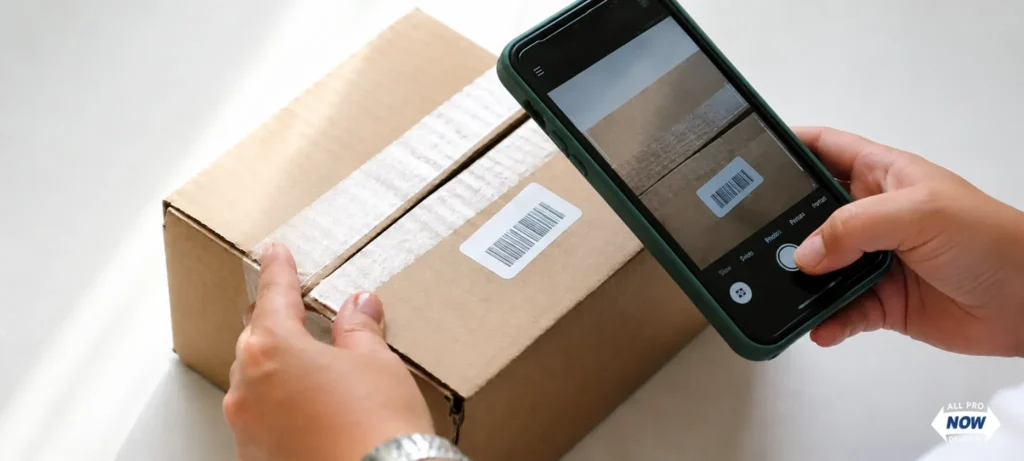
USPS defines proof of delivery as a record that includes the date, time, location of delivery, and recipient KYC verification details. That’s the baseline. Modern digital systems go significantly further, capturing multiple photographs, GPS coordinates, barcode scans, one-time PINs for high-value goods, and driver-completed condition reports.
For decades, the industry relied on paper, clipboards, carbon-copy forms, and handwritten logs. That worked at low volume, with forgiving timelines, and when disputes were rare. None of those conditions apply to most businesses today. Lost forms, illegible signatures, and missing paperwork created disputes that were expensive and nearly impossible to close. The shift to digital proof of delivery systems changed the stakes entirely.
A paper signature says a package was delivered. A digital POD record shows exactly where it was delivered, to whom, at what time, with photographic and GPS-verified evidence. That distinction matters the moment a dispute lands in your inbox.
What a Proof of Delivery Document Should Include
A well-built proof of delivery template captures every element needed to verify a completed shipment and defend it if challenged. The table below outlines the standard fields in a complete POD record and why each one matters.
| POD Element | What It Captures | Why It Matters |
| Recipient Name & Signature | Identity of the person who accepted the shipment | Establishes legal handoff and prevents “never received” claims |
| Delivery Address | Exact drop-off location | Confirms correct delivery, especially in multi-unit buildings |
| Date & Time Stamp | Precise delivery moment | Resolves timeline disputes and meets regulatory requirements |
| Photographs | Package condition and drop-off location | Visual evidence of successful delivery and item condition |
| Tracking Number / Barcode | Links physical delivery to digital record | Ensures correct package matched to correct order |
| Driver / Courier ID | Name or employee ID of delivering driver | Establishes accountability chain for carriers |
| GPS / Geotag Data | Location coordinates at time of delivery | Verifies delivery address without ambiguity |
| Order Details | Item description, quantity, weight, order number | Confirms what was delivered, not just that something was delivered |
| Notes / Special Conditions | Context like “left with security” or “ID verified” | Documents exceptions and protects both parties in edge cases |
| One-Time PIN (OTP) | Customer-issued code released at delivery | High-value shipment security layer — verifies authorized recipient |
For regulated industries, particularly healthcare and pharmaceutical logistics the FDA and DEA require documented chain-of-custody records that a complete proof of delivery record satisfies. Missing any of the core fields can create compliance exposure, not just operational headaches.
Why Proof of Delivery Is Critical for Your Business
It Stops Payment Disputes Before They Start
Nearly 40% of all payment delays trace back to disputed or missing delivery documentation. That’s not a fringe issue, it’s a systemic one. A Cleveland manufacturer waiting on a replacement part, a Pittsburgh law firm sending a time-sensitive filing, a Columbus retailer fulfilling a high-value order, every one of these situations creates payment exposure when the delivery can’t be documented.
A complete proof of delivery record makes those disputes difficult to sustain. A timestamped photo, a GPS-verified location, and a recipient signature are hard to argue against. Businesses that run strong POD processes don’t just resolve disputes faster, they see fewer of them, because the documentation deters false claims before they’re filed.
It Protects Both Sides of the Transaction
POD documentation isn’t a one-sided defense tool. It protects recipients too. When a shipment genuinely goes to the wrong address, gets left in an unsafe location, or arrives damaged, the delivery record helps identify exactly what happened and who bears responsibility. That clarity benefits the customer just as much as the sender.
This matters especially in high-stakes delivery environments. Medical couriers moving lab specimens between hospitals in Columbus or Detroit cannot afford ambiguity in their chain-of-custody records. A pharmaceutical distributor shipping temperature-sensitive products across Florida needs exact documentation at every handoff. When the delivery itself carries risk, POD records are not optional.
It Creates Measurable Carrier Accountability
When drivers know their deliveries are being documented, with photos, timestamps, and digital sign-off, delivery quality improves. This is documented operational behavior, not a theory. Accountability changes how people work. Carriers who know their performance is tracked deliver more carefully, document more thoroughly, and create fewer exceptions.
For businesses using third-party courier networks, this creates something valuable: a data trail. You can track on-time rates, identify problem routes, and use objective records to address issues rather than relying on subjective accounts from either side.
It Enables Faster Billing Cycles
Delivery confirmation tied directly to invoicing removes one of the most common billing delays in logistics operations. When a proof of delivery record is generated automatically at drop-off and linked to the shipment record, billing can proceed immediately. Businesses that integrate POD with their invoicing workflows report faster payment cycles because documentation and billing happen together, not sequentially.
Paper vs. Digital Proof of Delivery: A Direct Comparison
The logistics industry spent decades on paper-based POD systems. The comparison below shows clearly why digital has become the standard, and what businesses give up by staying on paper.
| Feature | Paper POD | Digital POD |
| Signature capture | Handwritten, often illegible | Digital, timestamped, tied to GPS location |
| Photographic evidence | Not available | Multiple photos, GPS-tagged, time-stamped |
| Real-time accessibility | Not available, requires physical retrieval | Instantly accessible by dispatchers and customers |
| GPS verification | Not available | Automatically attached to every delivery event |
| Dispute resolution speed | Slow, requires locating physical records | Fast, records retrieved in seconds by tracking number |
| Record durability | Subject to loss, damage, or degradation | Cloud-stored, searchable, permanently retrievable |
| Fraud resistance | Low, handwritten forms can be manipulated | High, timestamps, GPS, and photos create verifiable records |
| Billing integration | Manual entry required | Can trigger automatic invoicing on delivery confirmation |
| Scalability | Breaks down at volume | Scales without additional administrative burden |
| Regulatory compliance | Difficult to audit | Structured records support compliance documentation |
The practical difference becomes apparent the moment a dispute occurs. Paper requires someone to locate a physical form, read handwriting, and interpret incomplete information. Digital records are retrieved in seconds, with objective verification built in.
According to the U.S. Department of Defense’s logistics guidance, proof of delivery documentation is a foundational requirement in any government or commercial supply chain with accountability obligations. Digital systems make that documentation defensible in a way that paper simply cannot.
Proof of Delivery Across Key Industries
Manufacturing and Industrial Supply
Manufacturers across Ohio’s industrial corridor, Cleveland, Akron, Canton, Youngstown operate on production timelines where a delayed or lost part can shut down a floor. Proof of delivery on incoming parts and outgoing shipments gives operations managers exact arrival and departure records. It eliminates the “the driver said it was delivered” back-and-forth and replaces it with objective documentation.
Healthcare and Medical Logistics
Hospitals, diagnostic labs, pharmacies, and physician offices across Michigan, Pennsylvania, and Florida handle shipments where documentation is both operational and regulatory. Lab specimens, controlled substances, and medical equipment require verified chain-of-custody records at every handoff. A missing or incomplete proof of delivery isn’t just an inconvenience, it can create compliance exposure under federal drug supply chain regulations.
Legal and Professional Services
Law firms and legal courier services in Pittsburgh, Columbus, and Detroit regularly transport time-sensitive filings, contracts, and evidence. In legal contexts, delivery confirmation often needs to meet evidentiary standards. A digital POD with a timestamped signature and GPS-verified delivery location satisfies those requirements. A paper form does not.
Construction and Equipment Delivery
Construction sites in Florida and New York receive expensive equipment and materials that are frequently subject to damage claims. A condition photograph taken at delivery, showing the equipment’s state the moment it arrived, is the clearest possible evidence in a damage dispute. Without it, those claims become difficult to contest.
Retail and E-Commerce Distribution
Retailers managing last-mile distribution across markets like Detroit, Indianapolis, and Northern Kentucky need POD at scale. High claim rates in e-commerce make digital delivery confirmation a baseline expectation, not a premium feature. Customers who receive automatic delivery notifications with photo evidence are significantly less likely to file false claims.
How AllProNow Handles Proof of Delivery
For businesses that need same-day or rush delivery with verified documentation built in, AllProNow is built specifically for that use case. AllProNow is an online freight management platform headquartered in Westlake, Ohio, operating across seven states, Ohio, Florida, Michigan, Indiana, Kentucky, Pennsylvania, and New York, covering 25+ cities and metro routes including Cleveland, Columbus, Cincinnati, Toledo, Akron, Youngstown, Detroit, Pittsburgh, and markets throughout Florida.
Every shipment through AllProNow includes real-time tracking and digital delivery confirmation as a standard feature. From pickup to drop-off, shippers have full visibility through a single portal. Delivery records are accessible immediately, no waiting, no manual retrieval.
Rush pickups happen within one to two hours. Standard pickups run two to three hours. Pricing is transparent with no fuel surcharges or hidden fees. For manufacturing, healthcare, legal, and construction businesses across the Midwest and Florida, AllProNow treats proof of delivery as a core part of every shipment, not an add-on.
Get an instant quote at AllProNow.
Proof of Delivery Best Practices
Getting POD right is as much a process discipline as a technology choice. These practices make a measurable difference:
Make documentation mandatory, not optional: Drivers under time pressure will skip steps if they can. Build POD completion into the delivery workflow so it’s required before a delivery can be marked complete. This is the single most important structural decision in a POD process.
Train drivers on photo quality: A blurry image taken mid-stride doesn’t protect anyone. Delivery workers across major carriers have noted publicly that device quality and time pressure contribute to poor POD photos, and that those photos regularly fail to resolve disputes. Clear, deliberate photos of the package at the exact drop-off location take seconds and prevent weeks of back-and-forth.
Document item condition at both pickup and delivery: For high-value goods, equipment, or anything damage-prone, photographing at pickup creates a baseline. Photographing at delivery closes the loop. Any damage between those two points has a clear origin on the timeline.
Use GPS verification on every delivery: A photo without location data can be disputed. GPS verification attached to every delivery event removes that ambiguity and gives dispatch teams the ability to verify driver routes and stop times in real time.
Integrate POD with billing: When delivery confirmation automatically triggers invoicing, businesses eliminate one of the most common causes of delayed payments. The documentation and the billing happen together, not in separate workflows that drift apart.
Retain records in a searchable, cloud-based system: Paper files don’t scale and can’t be retrieved remotely. Digital records organized by shipment date, customer name, and tracking number make dispute resolution a matter of minutes rather than days.
What to Look for in a Delivery Partner for Proof of Delivery
Not every courier service treats documentation the same way. When evaluating a delivery partner, these are the capabilities that matter for proof of delivery:
| Capability | What to Ask | Why It Matters |
| Digital signature capture | Is it timestamped and GPS-linked? | Undated signatures are legally weak |
| Multi-photo upload | Can drivers capture multiple images per delivery? | Single photos often miss critical context |
| Real-time record access | Can dispatchers pull records instantly? | Delays in record access slow dispute resolution |
| GPS & geotag verification | Is location captured automatically at delivery? | Prevents location disputes without manual verification |
| Barcode scanning | Does the system verify the right package? | Prevents wrong-package deliveries at handoff |
| Custom documentation fields | Can you add questions or checklists for specific job types? | Critical for regulated industries and high-value goods |
| Billing integration | Does delivery confirmation trigger invoicing? | Directly reduces payment cycle delays |
| Transparent pricing | Are all fees disclosed upfront? | Hidden surcharges erode ROI on delivery spend |
The right partner doesn’t make POD an optional feature, they build it into every shipment by default.
Proof of Delivery Protects Your Revenue, Your Relationships, and Your Operations
Forty percent of payment delays come from documentation problems. Disputes that should take minutes to resolve stretch into weeks when there’s no clean proof of delivery on file. For businesses handling high-value shipments, regulated goods, or time-critical deliveries, an undocumented drop-off isn’t just a liability, it’s a revenue risk.
The solution isn’t complicated. A complete, digital proof of delivery system captures what happened, who received it, where it was delivered, and when, with photographic and GPS-verified evidence attached to every record. That documentation resolves disputes before they escalate, keeps billing cycles clean, and gives businesses the operational visibility they need to hold carriers accountable.
For businesses across Ohio, Michigan, Pennsylvania, Florida, Indiana, Kentucky, and New York, AllProNow builds proof of delivery into every shipment, same-day and rush courier service across 25+ cities, real-time tracking, and digital delivery confirmation with no hidden fees.
Get an instant quote at AllProNow and see what documented, verified delivery looks like for your operations.