Businesses across the U.S. lose time, money, and customer trust every day because of one avoidable problem: failed or disputed handoffs at the point of delivery. A driver waits at a door nobody answers. A signature gets contested. A package disappears with no record of where it landed. No contact delivery was built to solve all of that, and it’s now the standard for everything from restaurant orders to cross-state industrial freight.
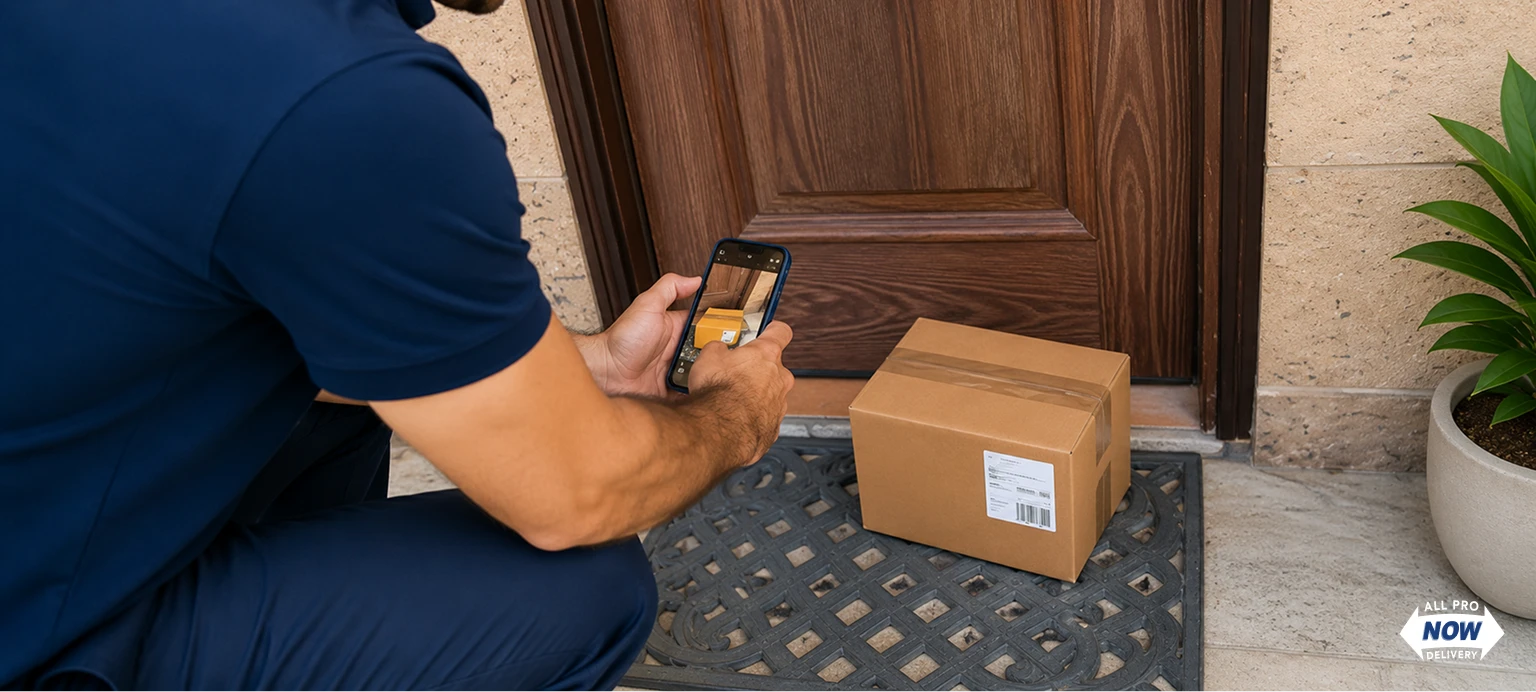
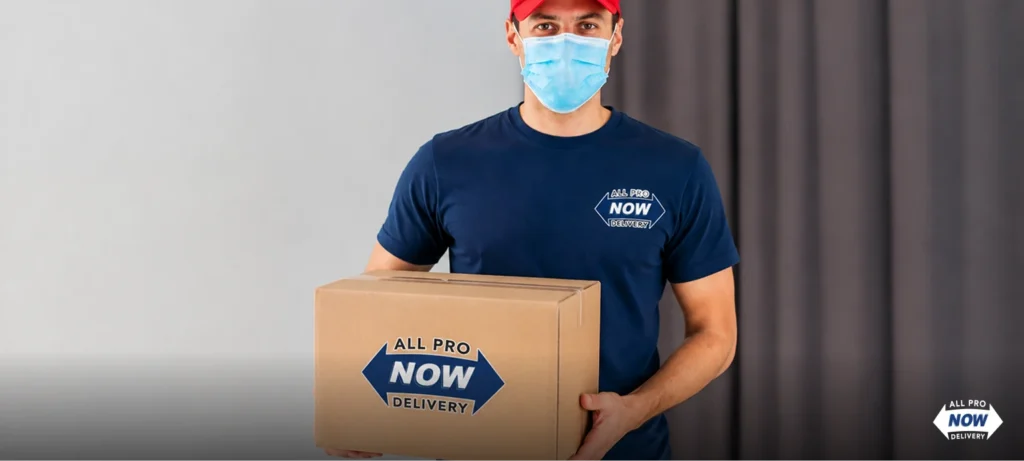
So, what is no contact delivery, exactly? It’s a method of completing a delivery without any in-person exchange between the driver and the recipient. The driver drops the order at a designated location, photographs it, and sends an automated notification. The recipient retrieves it on their own schedule, no knock, no wait, no handoff. It’s faster, more traceable, and increasingly preferred by both consumers and businesses across the country.
This blog breaks down exactly how the process works, which industries rely on it, what the data says about adoption, and how to execute it correctly, whether you’re shipping a restaurant meal or a pallet of industrial parts across Ohio, Florida, or Michigan.
Key Takeaways
- No contact delivery means goods are dropped at an agreed location, confirmed with a photo and an instant digital notification with zero face-to-face exchange.
- Payment is always completed digitally or in advance. No cash, no signatures at the door for standard shipments.
- The model started with food delivery during COVID-19 and has since become the operating standard for freight, medical supply, retail, and industrial logistics.
- B2B freight now drives the majority of same-day contactless volume, this is a commercial necessity, not just a consumer convenience.
- Photo proof of delivery is the accountability mechanism that makes the entire model work. Without it, disputes are nearly impossible to resolve.
- Businesses in Ohio, Florida, Michigan, Indiana, Kentucky, Pennsylvania, and New York have adopted it at scale to cut liability, speed up cycle times, and protect revenue.
What Does No Contact Delivery Mean?
No contact delivery, also called contactless delivery, refers to the movement of goods from a pickup point to a recipient without any in-person exchange between the driver and the person receiving the order. No handshake, no clipboard, no waiting at the door.
What does no contact delivery mean in practice? The entire transaction, from booking to final confirmation is completed digitally. The driver arrives, drops the shipment at a predetermined safe location (front door, loading dock, lobby, or drop zone), photographs it with a geotagged timestamp, and the system automatically notifies the recipient.
This is a last-mile delivery model, the final leg of a shipment’s journey from origin to recipient. And what does it mean no contact delivery for a B2B shipper versus a consumer? The execution is nearly identical. A Detroit manufacturer receiving machine components operates on the same contactless handoff logic as someone receiving dinner in Columbus, drop, photograph, confirm, notify. The difference is the scale, the documentation requirements, and the industries involved.
A Brief History: How No Contact Delivery Became Standard
No contact delivery existed before 2020. Package drop-offs and Amazon lockers had been around for years. But COVID-19 turned a convenience into a necessity, almost overnight.
Starbucks, McDonald’s, and major restaurant chains adopted contactless handoffs within weeks of the pandemic’s onset. Platforms like DoorDash and UberEats made “Leave at Door” a default toggle. Retailers followed. Medical and industrial shippers then built it into their standard operating procedures.
The shift stuck, not because of the virus, but because of efficiency. A 2021 survey of logistics companies in North America found that 41.2% ranked contactless delivery processes as a top operational priority, outpacing other last-mile investments. A McKinsey survey reinforces the permanence: more than 60% of consumers said they intended to continue using contactless services even after pandemic restrictions were lifted.
Contactless delivery is no longer a pandemic accommodation. It’s the baseline expectation.
How No Contact Delivery Works: Step by Step
The core flow is consistent whether you’re completing a restaurant drop or an LTL freight delivery.
| Step | What Happens | Who Acts |
| 1. Order & Payment | Customers or businesses place an order digitally. Payment is completed online, card, ACH, or app. No cash at delivery. | Customer / Dispatch |
| 2. Driver Assignment | Nearest available drivers are dispatched typically within 1–2 hours for same-day freight bookings. | Dispatch / Carrier |
| 3. Real-Time Notification | Recipients receive a text, email, or app alert with driver ETA and a live GPS tracking link. | System / Driver |
| 4. Drop at Agreed Location | The driver leaves the order at the designated spot, front door, loading dock, lobby, or drop zone. No knock-and-wait. | Driver |
| 5. Photo Confirmation | Driver photographs the delivered item at the exact drop location, capturing GPS coordinates and a digital proof of delivery timestamp. | Driver |
| 6. Recipient Notification | A photo is sent to the recipient via text or email automatically. For freight, this creates a legal-grade delivery record. | System |
| 7. Recipient Retrieval | Recipients pick up the order at their convenience, within 30 minutes for food, per schedule for freight. | Customer |
This workflow eliminates the most common failure point in last-mile logistics: the human handoff. No missed doors. No contested signatures. No “I never received it” without a documented counter.
No Contact Delivery by Industry: Who Uses It and How
No contact delivery is most visible in food delivery apps. But the B2B segment manufacturing, healthcare, retail, and construction, now drives the majority of same-day contactless volume in the U.S., and these industries have zero tolerance for undocumented or failed handoffs.
| Industry | How No Contact Delivery Is Used | Key States |
| Food & Restaurant | App-based drop at door; photo sent to customer; 30-minute retrieval window standard | Nationwide |
| Medical & Pharmaceutical | Lab samples, medications, and equipment dropped at clinic or hospital receiving areas; chain-of-custody medical delivery with photo and timestamp | OH, FL, PA, MI |
| Manufacturing & Industrial | Machine parts and production components dropped at plant docks; no staff required at handoff | OH, IN, MI, KY |
| Retail & B2B Wholesale | Inventory restocks and purchase orders dropped at store receiving areas; digital POD used for invoicing | OH, FL, NY, PA |
| Construction & Trades | Tools and materials dropped at job site entrance; driver calls ahead, photographs, departs | FL, OH, PA, IN |
| E-Commerce | Consumer packages dropped at front door with photo confirmation; no signature required for standard orders | Nationwide |
The commonality across all of these: zero dependence on a face-to-face handoff. The shipment is documented entirely by digital means.
How Do You Pay for No Contact Delivery?
This is one of the most-searched questions on the topic, and the answer is direct: all payment happens digitally, before or at the time of booking. The driver and recipient never exchange money.
Payment options include:
- Credit or debit card through the delivery app or booking portal
- ACH bank transfer for B2B freight invoices and recurring commercial accounts
- Third-party platforms such as Stripe, Square, or PayPal for consumer and small business orders
- Phone authorization for one-off or emergency shipments
- Corporate billing accounts with net-30 terms for high-volume freight clients
For consumer food delivery, the app handles everything end-to-end. For freight and commercial shipping, transparent upfront pricing, with no hidden fuel surcharges or after-the-fact fees, is what separates reliable carriers from the rest. The pre-delivery digital payment structure is what makes the entire no-contact model structurally sound. There’s no reason for a driver to stop, wait, or interact at the door.
The Role of Photo Confirmation in No Contact Delivery
Photo confirmation is not optional. It’s the core accountability mechanism of the entire contactless model.
When a driver drops an order and photographs it, that image captures the GPS coordinates, the timestamp, and the exact drop location. That combination creates a proof of delivery record that protects both parties: the carrier proves the delivery happened, and the recipient has visual confirmation of where their shipment landed.
The data makes the stakes clear. Nearly 45% of Americans have experienced package theft, according to a 2024 study, and without photo documentation, theft and “non-receipt” claims are nearly impossible to disprove. Shopify’s delivery research adds another dimension: more than 75% of consumers now prioritize secure delivery and tracking visibility when selecting a shipping provider.
For B2B freight, AllProNow’s own operational data shows that nearly 40% of all payment delays stem from disputed or missing delivery documentation, a problem that photo POD eliminates at the moment of drop.
A quality no contact delivery photo should include:
- The package clearly visible at the exact drop location
- The building number, door, dock, or designated area in frame
- Clean lighting, not a blurry image captured mid-stride
- GPS coordinates and timestamp captured by the delivery app
Blurry, motion-blur photos taken while walking away protect no one. A clear, deliberate photograph takes five seconds. A billing or fraud dispute without one can take weeks to resolve.
No Contact Delivery Best Practices: For Businesses Shipping or Receiving
Whether you’re a retailer in Tampa restocking inventory, a manufacturer in Akron awaiting machine components, or a medical facility in Pittsburgh receiving lab supplies, these practices reduce friction and protect your operations.
1. Designate a clear, specific drop location before the driver arrives: Telling a driver “leave it at the door” is not enough for commercial delivery. Specify the dock number, suite entrance, security desk, or marked drop zone. Businesses in multi-tenant buildings in Columbus, Cleveland, Indianapolis, or Jacksonville should include building access codes and elevator or security protocols in the delivery notes.
2. Require photo confirmation on every shipment, no exceptions: Every no contact delivery should generate a geotagged photo with a timestamp. For freight, medical supplies, and high-value commercial shipments, this is the difference between a defensible delivery record and a disputed one.
3. Automate recipient notifications the moment the drop is confirmed: Recipients shouldn’t have to call to verify arrival. A text or email with the photo and timestamp, sent automatically within seconds of drop, reduces inbound inquiries and builds the kind of trust that drives repeat business. Package tracking visibility from pickup through confirmation is what separates a professional no contact delivery from one that leaves recipients wondering. Silence after a drop is a service failure, even if the package landed perfectly.
4. Use tamper-evident packaging for sensitive or high-value shipments: For pharmaceutical, food, or industrial freight, tamper-evident seals confirm the package wasn’t accessed between pickup and delivery. This matters for both safety compliance and dispute resolution.
5. Train drivers on photo quality, not just photo frequency: Inconsistent photo quality is the most common breakdown in contactless delivery execution, a finding consistent across real-world driver discussions and logistics operations. A clear, deliberate drop photo takes five seconds. A dispute without one can take weeks. Make quality the standard, not a suggestion.
When No Contact Delivery Doesn’t Apply
No contact delivery works for the vast majority of shipments. There are clear exceptions worth knowing before you book.
Age-restricted items: Alcohol and certain pharmaceuticals require ID verification at the point of delivery. Contactless drop is not permitted for these in most jurisdictions, including Ohio, Florida, Michigan, Indiana, Kentucky, Pennsylvania, and New York.
High-value items requiring a signature: Some commercial contracts or insurance policies require a recipient signature at handoff. Review your carrier’s terms before assuming contactless delivery is available for every freight type.
White-glove and installation deliveries: Furniture assembly, appliance hookups, and heavy equipment placement require in-person interaction by definition. These are not no-contact deliveries.
Returns requiring signed documentation: Some reverse logistics scenarios require a signed receipt at pickup, not just at drop. Check your carrier’s specific policy before scheduling a contactless return pickup.
No Contact Delivery Is Here to Stay: What the Data Shows
The numbers make one thing clear, no contact delivery has permanently restructured how goods move across the country, not as a pandemic workaround, but as a competitive standard.
The global same-day delivery market, the segment most directly tied to contactless execution, was valued at $9.9 billion in 2024 and is projected to reach $29.8 billion by 2030, growing at a CAGR of 20.6%. That growth is being driven predominantly by business-to-business volume. The B2B segment alone accounted for 61.5% of same-day delivery market share in 2024, manufacturers, medical facilities, retailers, and construction operations in markets like Ohio, Michigan, Florida, and Pennsylvania that simply cannot afford slow or undocumented handoffs.
Consumer behavior has shifted permanently, and the expectation has moved beyond contactless drop to full delivery visibility. Research shows nine in ten consumers actively track their packages and expect real-time tracking updates at every stage of the process. No contact delivery without real-time notification is an incomplete product.
On the accountability side, the proof-of-delivery platform market reached $4.1 billion in 2024, a direct reflection of how central geotagged photo confirmation has become to no contact delivery at scale. When package theft and delivery disputes are this common, a timestamped photo at the drop point isn’t a courtesy feature. It’s the only reliable evidence either party has.
This isn’t a trend. It’s the new infrastructure of American commerce.
AllProNow: No Contact Same-Day Freight Across Seven States
For businesses that need dependable same-day delivery or expedited freight with real-time GPS tracking, timestamped photo proof of delivery, and clean contactless execution at every stop, AllProNow delivers.
AllProNow operates across seven states, with dedicated coverage in Ohio and Florida, as well as Michigan, Indiana, Kentucky, Pennsylvania, and New York. Service spans 25+ major cities and industrial corridors, including Columbus, Cleveland, Akron, Toledo, Detroit, Indianapolis, Pittsburgh, Miami, Orlando, Tampa, Jacksonville, and Fort Lauderdale.
Every shipment includes:
- 1–2 hour pickup windows for rush deliveries
- Live GPS tracking from pickup to drop
- Geotagged, timestamped photo proof of delivery on every stop
- Transparent pricing with no hidden fuel surcharges
- 99% on-time performance across all service areas
Industries served include manufacturing, medical and pharmaceutical, retail and B2B wholesale, construction and trades, and e-commerce fulfillment. Whether you’re moving a single critical part to a plant in Akron or managing recurring freight across multiple Florida locations, AllProNow handles it with the speed, documentation, and accountability that no contact delivery demands.