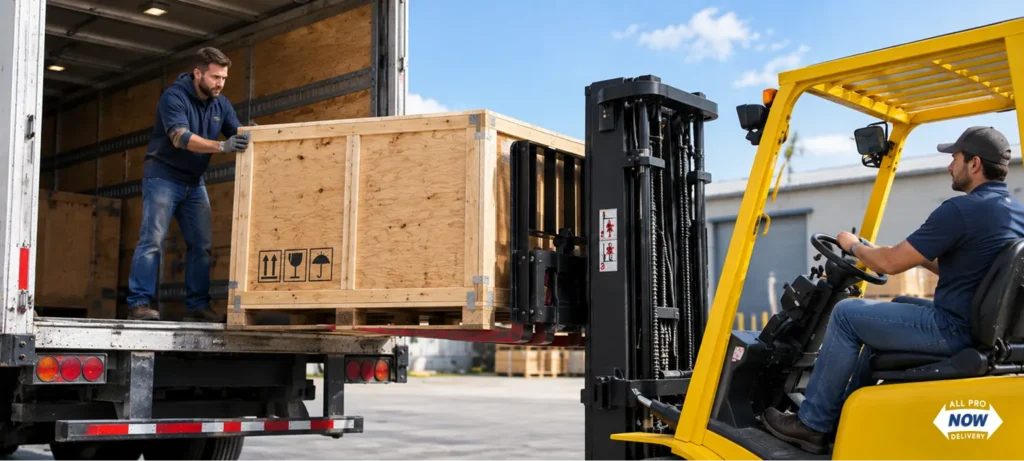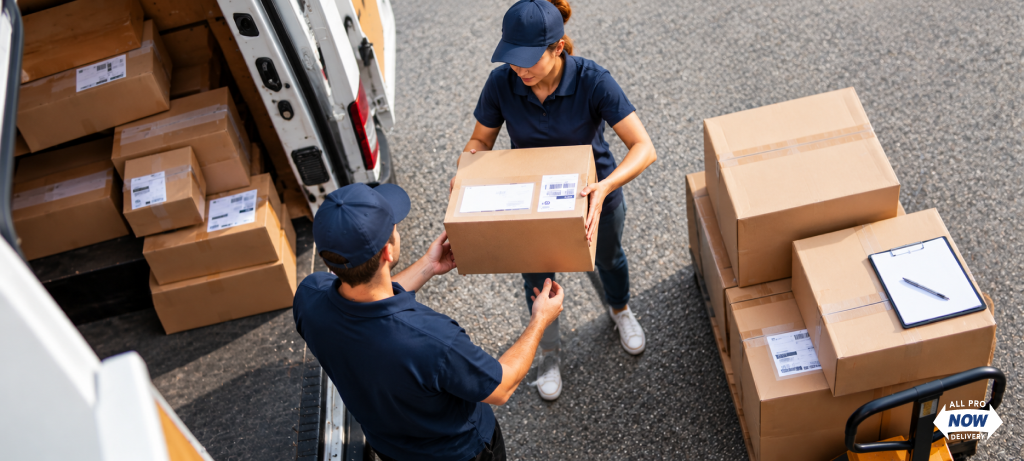
At All Pro NOW, we quote same-day routes across Ohio, Michigan, Pennsylvania, and Florida every day. The question we hear most is simple: how much to charge for delivery per mile? The answer depends on your vehicle, your true costs, and your customer. This guide pairs fresh 2026 data from federal and industry sources with a simple formula and real Midwest examples.
Our perspective comes from decades on the road. All Pro NOW is the courier division of All Pro Freight Systems, which was founded in Cleveland, Ohio, in 1990 as a truckload company. Our drivers also earned a 2025 Acuity Insurance safety performance award. We’ve watched fuel spikes and pricing mistakes up close. Here’s what we’ve learned.
Key Takeaways
- Typical U.S. ranges: Most local couriers charge about $1.25 to $3.25 per mile for cars and cargo vans. Box trucks often run $2.75 to $4.75.
- Costs are rising: The IRS raised its business mileage rate mid-year, and diesel costs far more than it did a year ago.
- Use the IRS rate as a floor: At 76 cents per mile, it covers a car’s operating cost, not your labor or profit.
- Set a minimum charge: Short runs still take time for loading, waiting, and parking.
- Price the empty miles: On one-way runs, the drive home is a real cost.
- Mark up direct work: Add 20% to 50% for your own customers versus brokered jobs.
Why Per-Mile Pricing Is Harder Than It Looks
Mileage is only one piece of the job. Every delivery also includes driving to pickup, loading, waiting, unloading, and getting a signature. A three-mile run can easily eat an hour.
One veteran courier on YouTube made this point clearly. He’d never charge a few dollars for a three-mile trip. He still has to dispatch the vehicle, wait for loading, and unload at the other end. That’s why smart operators pair a per-mile rate with a firm minimum.
Small businesses face the same puzzle. On Reddit, a cupcake seller asked whether to charge a flat fee or charge by distance. The best replies agreed: keep it simple for customers, and make sure the math works for you.
What Each Delivery Mile Really Costs in 2026
Before you decide how much to charge for delivery per mile, know what each mile costs you. Most operators underestimate this number. Here’s what trusted sources say right now.
The IRS benchmark just went up: For travel starting July 1, 2026, the IRS business mileage rate rose to 76 cents per mile, up from 72.5 cents earlier in the year. The agency cited rising fuel prices for the increase. Keep in mind that the IRS rates leave out tolls and parking. See the current figures on the IRS standard mileage rates page.
Fuel is the fastest-moving cost: According to the U.S. Energy Information Administration, regular gas averaged about $4.16 per gallon and diesel nearly $5.97 in early September 2026. Diesel was up roughly $2.20 from a year earlier. That hits van and box truck operators hardest. Learn how carriers pass this along in our guide to fuel surcharges.
Owning a vehicle costs more than gas: AAA’s Your Driving Costs study puts a new medium sedan at about 66 cents per mile when driven 15,000 miles a year. That study used gas averaging roughly $3.15 per gallon, so today’s real cost is higher.
Trucking costs hit a record: The American Transportation Research Institute found the average truck cost $2.336 per mile to operate in 2025, the highest in the report’s history. Tolls jumped 13.2% and repairs rose 8.6%. ATRI also reported empty (deadhead) miles at 16.5% and called them one of the biggest drains on cost. These figures reflect heavy trucks, but the trends apply to vans too.
Labor is your biggest variable: The Bureau of Labor Statistics reports a median annual wage of $44,860 for light truck drivers in May 2025. That’s about $21.50 an hour before payroll taxes and benefits.
Here’s how those inputs add up for two common vehicles. These are sample estimates using 2026 fuel prices. Plug in your own numbers.
| Cost Per Mile | Car Courier (city) | Sprinter Van (mixed driving) |
| Fuel | $0.16 | $0.37 |
| Maintenance and tires | $0.12 | $0.18 |
| Insurance, payment, depreciation | $0.45 | $0.55 |
| Driver labor (~$25/hr loaded) | $0.83 | $0.63 |
| Overhead (apps, phone, dispatch) | $0.10 | $0.12 |
| Total cost per mile | $1.66 | $1.85 |
| Rate with 25% margin | ~$2.08 | ~$2.31 |
How Much to Charge for Delivery Per Mile: 2026 Rate Ranges
The table below shows typical U.S. ranges for local and regional work. Use it as a reality check, not a rulebook. Rural lanes, after-hours runs, and rush service usually land at the high end.
| Vehicle / Model | Typical Rate Per Mile | Typical Minimum Per Job |
| Personal car (documents, small parcels) | $1.25 – $2.25 | $20 – $40 |
| Cargo van or Sprinter van | $1.75 – $3.25 | $50 – $95 |
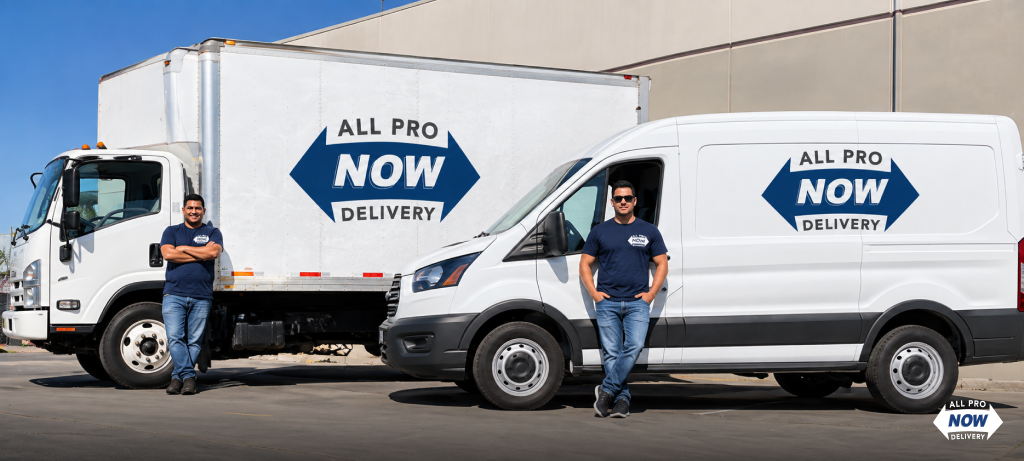
| 26-ft box truck with liftgate | $2.75 – $4.75 | $125 – $250 |
| Small business add-on delivery (bakery, florist) | $5 – $10 base + $0.50 – $1.00 per mile | $5 – $15 |
Not sure which vehicle fits your load? Check All Pro NOW’s service area and vehicle capacity guide.
How Much Do Couriers Charge Per Mile?
Couriers usually charge more per mile than a shop adding delivery as a perk. Delivery is their product. Their pricing also shifts based on where the job came from.
If a broker or app hands you the job, expect a lower rate. The broker keeps a share of the fare. For direct customers, experienced couriers often add at least 50% on top of brokered rates. That’s a solid rule when asking, “how much should I charge per mile for delivery?”
A Simple Formula to Set Your Per-Mile Rate
You don’t need an accounting degree for this. Follow five steps, and revisit them every quarter. Fuel alone moved enough in 2026 to justify it.
Step 1: Total your monthly costs. Add fuel, insurance, vehicle payments, maintenance, and overhead.
Step 2: Divide by total miles driven. Include empty miles, not just loaded ones. That’s your vehicle cost per mile.
Step 3: Add labor per mile. Divide your hourly driver cost by your average speed. City work runs slower than highway work.
Step 4: Add your margin. Most healthy delivery operations target 15% to 35% on top of cost.
Step 5: Check the market. Compare against local competitors. If you’re far above them, trim costs before cutting price.
Here’s the formula in one line:
(Vehicle cost per mile + labor per mile + overhead per mile) × (1 + margin) = your rate
Real-World Examples Across Ohio, Michigan, and Pennsylvania
Numbers make more sense on a real map. These three lanes reflect the kind of work All Pro NOW handles every week for same-day delivery in Ohio.
Cleveland to Akron (car, rush lab samples): The trip runs about 40 miles. At $2.10 per mile, the fare is about $84. For medical deliveries, add a premium for chain-of-custody handling and tight windows.
Cleveland to Columbus (Sprinter van, one-way): The trip is about 143 miles, but the van returns empty. That’s 286 total miles. At a highway cost near $1.45 per mile, the run costs about $415. Add 25%, and the quote lands near $520. That’s about $3.63 per loaded mile. Comparing providers there? See our roundup of shipping companies in Columbus, Ohio.
Detroit to Toledo (box truck, construction materials): The trip covers about 60 miles. At $3.75 per mile, that’s $225 before extras. A liftgate or job-site appointment justifies an added fee. Learn more about same-day delivery in Michigan.
In Pittsburgh, factor in turnpike tolls, bridges, and tight downtown parking. Our Pennsylvania same-day delivery page covers that market. In Youngstown or Canton, lighter traffic can mean faster turns. Serving Florida? The same formula applies with same-day delivery in Florida.
Flat Rate, Zones, Per Mile, or Per Stop? Choosing a Pricing Model
Per-mile pricing isn’t your only option. The right model depends on what you deliver and how far you go.
| Pricing Model | Best For | How It Works | Watch Out For |
| Flat-rate zones | Bakeries, florists, restaurants | One price per radius (e.g., 0–5 miles) | Losing money at zone edges |
| Base fee + per mile | Most small businesses | 5–10 base plus a mileage add-on | Explaining it clearly at checkout |
| Straight per mile | Couriers, B2B, regional runs | Rate × miles, with a minimum | Forgetting deadhead miles |
| Per stop (multi-drop) | Routed retail or parcel work | Fixed fee per stop on one route | Poor routing kills margin |
One Reddit contributor shared a clean per-stop example. They paid a driver $25 an hour plus $0.58 per mile. A five-stop, 10-mile route took about an hour and cost $30.80. That’s $6.16 per delivery. All Pro NOW’s on-demand delivery services let shippers add multiple stops to one order, which lowers the cost per drop.
Selling a couch on Facebook Marketplace? Many casual sellers charge $1 to $2 per mile with a $20 to $40 minimum. Pricing in kilometers? Divide your per-mile rate by 1.609 to get your per-km rate.
Common Pricing Mistakes to Avoid
Even experienced operators slip on these. Each one quietly drains profit.
Undercharging loyal customers: Good customers are hard to win and tend to stay. If they’d pay $2 per mile, charging $1.50 leaves money on the table.
Ignoring deadhead miles: ATRI’s data shows roughly one mile in six runs empty for trucking fleets. Price the full round trip on long one-way jobs.
Skipping a minimum: Without one, short jobs lose money every time. Set a floor for each vehicle class.
Forgetting wait time: Dock delays are real costs. Many couriers allow 15 free minutes, then bill in short increments.
Hiding fees: Surprise charges erode trust. Clear, upfront pricing keeps customers coming back. It’s also a core theme in our look at last-mile delivery costs.
When Outsourcing Beats Running Your Own Van
With fuel, insurance, and repairs all climbing, owning a delivery vehicle gets harder to justify. Sometimes the smartest move isn’t a better rate. It’s handing delivery to a partner with fleet, drivers, and routing already in place. Our guide on partnering with a third-party delivery service walks through that decision.
That’s where All Pro NOW fits. Our same-day courier services support healthcare providers, law firms, construction crews, and retailers. We also serve manufacturers and aerospace companies through our B2B delivery services. Our coverage includes Northeast Ohio, Columbus, Toledo, Detroit, Akron/Canton, Youngstown, and Pittsburgh.
Pricing is built for predictability. Shippers can enter pickup and delivery ZIP codes for an estimated Sprinter van or box truck rate, confirmed at booking. After confirmation, the nearest available driver picks up within one to two hours. Rates are quoted upfront with no fuel surcharges or residential fees. Every job includes digital proof of delivery and live tracking.
The Bottom Line on How Much to Charge for Delivery Per Mile
Figuring out how much to charge for delivery per mile starts with your true costs, not a competitor’s price tag. Use the IRS rate as a floor, add labor and overhead, and apply a fair margin. Set a minimum. Price your empty miles. Then recheck your numbers whenever fuel moves.
Rather skip the spreadsheet? Get an instant quote from All Pro NOW for same-day delivery across Ohio, Michigan, Pennsylvania, and Florida. Need a custom lane or recurring route? Contact our dispatch team today.