Shipping visibility is the difference between guessing where your freight is and knowing exactly where it is. For businesses across Ohio, Michigan, Pennsylvania, Indiana, Kentucky, New York, and Florida, that difference shows up on the bottom line every week.
AllProNow, a regional logistics provider serving these seven states, builds its delivery model around one idea: shipping visibility should never be optional. This blog breaks down what shipping visibility really means, why it’s become a competitive necessity, and how to get more of it without overhauling your operation.
Key Takeaways
- Shipping visibility means real-time, verified data on shipment location, status, and ETA, not just a tracking number.
- Freight shipping visibility reduces detention fees, missed appointments, and customer complaints.
- Real time shipment visibility depends on GPS tracking, live dashboards, and proactive alerts, not manual check-ins.
- Shipper visibility matters most for time-sensitive freight in ecommerce, legal services, and B2B distribution.
- Businesses in Columbus, Pittsburgh, Detroit, Miami, and similar markets can improve visibility without new software or long contracts.
What Shipping Visibility Actually Means
Shipping visibility is the ability to see a shipment’s location, status, and expected delivery time as it happens. It’s not a tracking link you check once a day. It’s continuous, accurate data flowing from pickup to final delivery.
Most shippers think they already have this. They don’t. One study from the Business Continuity Institute found that 69% of companies lack complete visibility into their supply chains, which raises the risk of costly surprises. A tracking number that updates every 12 hours isn’t visibility, it’s a rearview mirror.
Real shipping visibility tells you what’s happening now, not what happened hours ago. Research cited by Gartner found that companies with strong real-time visibility are roughly 2.5 times more likely to be high performers, yet close to three in four businesses still lack full end-to-end visibility. That gap is exactly what a smaller, faster-moving shipper can close.
Why Freight Shipping Visibility Is No Longer Optional
Freight shipping visibility used to be a nice-to-have for large enterprise shippers. That’s changed. Smaller businesses in Toledo, Akron, Youngstown, and Cincinnati now compete against companies with enterprise-grade tracking tools.
Customers expect accurate delivery windows. Retailers expect proof of pickup and delivery. Warehouse teams expect enough lead time to schedule dock space. Without freight shipping visibility, all three expectations go unmet.
There’s also a hard cost angle. Truck driver detention alone accounted for over 135 million lost hours industry-wide in 2023, with detention occurring on nearly four in ten stops, costing the trucking industry an estimated $3.6 billion in direct expenses. Detention and demurrage charges build quietly in the background until they hit an invoice. Without visibility into aging containers or delayed trailers, businesses absorb charges they could have avoided with a two-hour heads-up.
Port congestion, weather, and carrier delays aren’t going away. What separates prepared shippers from reactive ones is whether they see disruption coming or find out after it’s already cost them time and money.
Real Time Shipment Visibility vs. Basic Tracking Numbers
Real time shipment visibility means status updates as events happen, not a static PDF or a single confirmation email. The gap between the two shows up fast when something goes wrong. One industry survey found that 60% of businesses only discover shipment damage after delivery, when it’s already too late to act. That’s the cost of relying on a tracking number instead of live data.
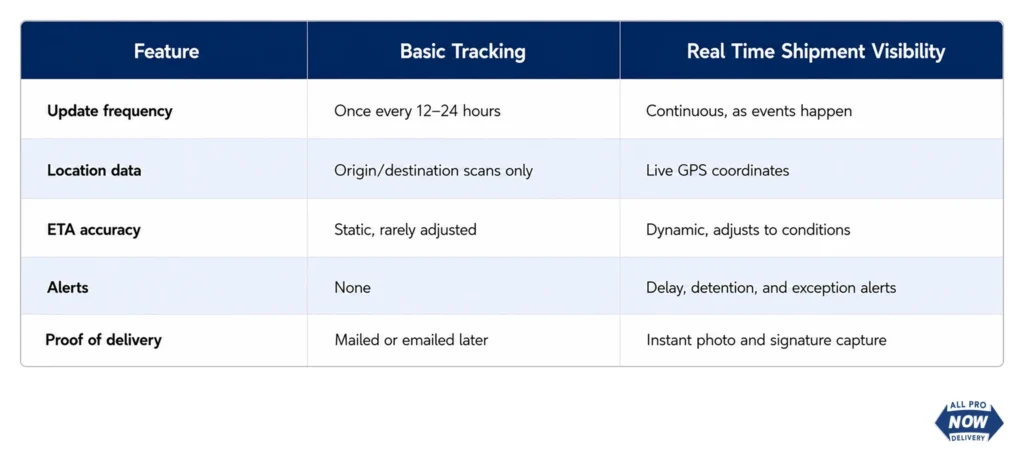
For a business in Indianapolis shipping parts to a manufacturing plant, that gap is the difference between a smooth production run and an idle line. For a retailer in Orlando managing weekend deliveries, it’s the difference between a happy customer and a support ticket.
What Shipper Visibility Looks Like Across the Midwest and Southeast
Shipper visibility isn’t one-size-fits-all. What a courier needs in Philadelphia differs from what a distribution center needs in Jacksonville. But the fundamentals hold everywhere.
Ecommerce and retail: Fast-growing online sellers in Cleveland and Fort Lauderdale need shipper visibility that connects directly to customer-facing tracking. A shopper who sees “out for delivery” with a live map is far less likely to contact support.
B2B and manufacturing: Businesses moving parts or materials between Detroit, Harrisburg, and Allentown rely on shipper visibility to plan dock schedules and avoid production delays. A missed appointment at one facility can ripple through an entire week.
Legal and time-sensitive documents: Law firms and courts in Pittsburgh and Tampa need guaranteed, trackable delivery for contracts and filings. Shipper visibility here isn’t about convenience, it’s about compliance and deadlines.
This is where AllProNow fits into the picture. As a logistics partner already operating same-day and LTL routes across these markets, AllProNow builds shipper visibility into the delivery itself, rather than treating it as a separate purchase.
How AllProNow Delivers Shipping Visibility for Regional Freight
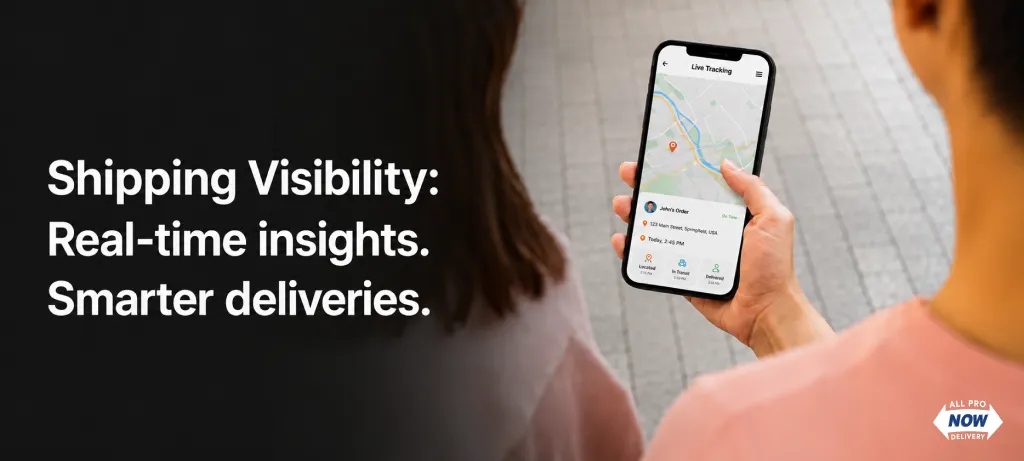
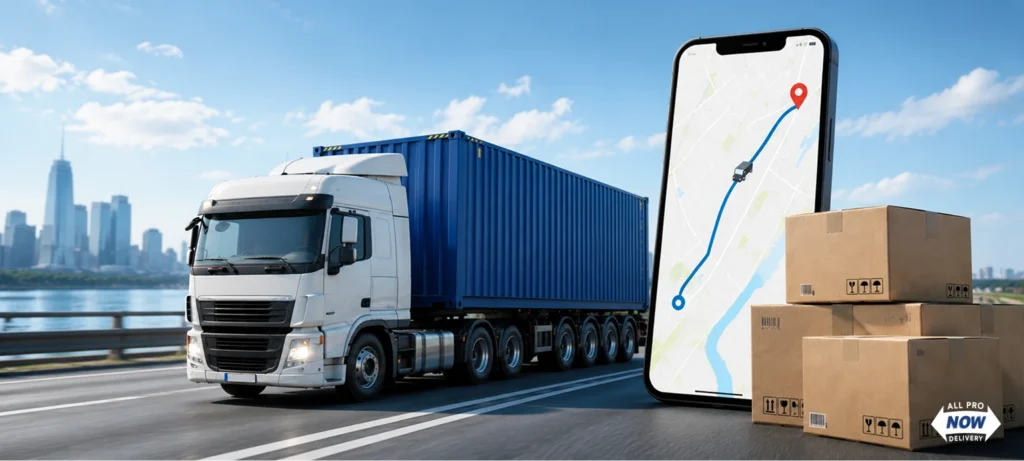
AllProNow builds shipping visibility into every delivery, not as an add-on. Businesses shipping across Ohio, Florida, Michigan, Indiana, Kentucky, Pennsylvania, and New York get live GPS tracking from pickup to drop-off.
For companies handling larger loads, AllProNow’s LTL freight service pairs with a shipper dashboard that shows real-time status, accurate ETAs, and digital proof of delivery. If you’re already managing multi-stop or business-critical freight, a dashboard with live shipment visibility replaces phone-tag with your carrier.
This matters most for businesses that can’t afford a delivery surprise, a Cincinnati retailer during peak season, a Miami distributor with same-day promises, a Columbus manufacturer waiting on a critical part. Shipping visibility turns “we’ll call you when it arrives” into “here’s exactly when it arrives.”
With over 50 years of combined logistics experience and a driver network across 25+ cities, AllProNow treats shipping visibility as infrastructure, not a feature. Businesses get transparent pricing alongside the tracking, so there are no surprises on the invoice either.
AllProNow Regional Service Footprint
| State | Key Cities Served | Common Freight Type |
| Ohio | Columbus, Cleveland, Toledo, Akron, Youngstown, Cincinnati | Same-day parcel, LTL freight |
| Michigan | Detroit | LTL freight, B2B |
| Pennsylvania | Pittsburgh, Philadelphia, Allentown, Harrisburg | Legal courier, LTL freight |
| Indiana | Indianapolis | B2B, manufacturing parts |
| Florida | Miami, Orlando, Tampa, Jacksonville, Fort Lauderdale | Ecommerce, retail |
| Kentucky | Regional coverage | LTL freight |
| New York | Regional coverage | Parcel, LTL freight |
Practical Steps to Improve Shipping Visibility at Your Business
You don’t need to replace your entire logistics stack to get better shipping visibility. Start with these steps:
- Audit your current tracking: Ask how often status updates refresh. If it’s less than once per hour for active shipments, you have a gap.
- Centralize your data: If you use multiple carriers, look for one dashboard that pulls all shipments into a single view.
- Set alert thresholds: Configure alerts for delays, missed pickups, or aging containers, don’t wait for a customer to tell you first.
- Require proof of delivery: Photos, signatures, and timestamps should be automatic, not requested after a dispute.
- Review carrier contracts: Detention and demurrage terms should tie directly into your visibility alerts, so charges never come as a surprise.
None of these require enterprise software budgets. They require choosing a logistics partner that treats shipping visibility as a baseline expectation, not a premium upsell.
The Cost of Poor Shipping Visibility
Poor shipping visibility is expensive in ways that don’t always show up on a single invoice line. Missed dock appointments waste warehouse labor. Late deliveries generate support tickets. Detention fees accumulate quietly until finance flags them.
There’s a reputational cost too. Customers who can’t get an accurate delivery window go elsewhere. B2B partners who experience repeated delays start shopping for new vendors. Nearly four in ten U.S. small businesses have reported experiencing supply chain delays, and in competitive markets like Columbus, Detroit, and Tampa, the businesses that stand out are the ones who can see problems coming.
The fix isn’t complicated. It’s consistent, accurate, real-time data, paired with a logistics partner who acts on it before problems reach your customers.
Final Thoughts: Shipping Visibility Is a Business Advantage
Shipping visibility has moved from a logistics department concern to a company-wide priority. Businesses that see their freight clearly plan better, spend less, and keep customers happier. Businesses that don’t are stuck reacting.
If your company ships across Ohio, Florida, Michigan, Indiana, Kentucky, Pennsylvania, or New York, shipping visibility shouldn’t be something you have to ask for. AllProNow builds it into every same-day delivery and LTL freight shipment, backed by live GPS tracking and transparent pricing. Get an instant quote at AllProNow and see your next shipment in real time from pickup to delivery.