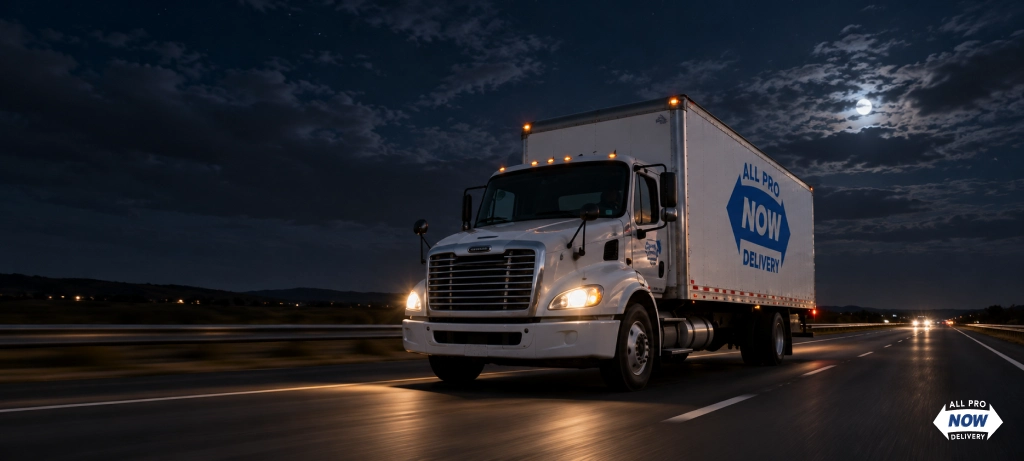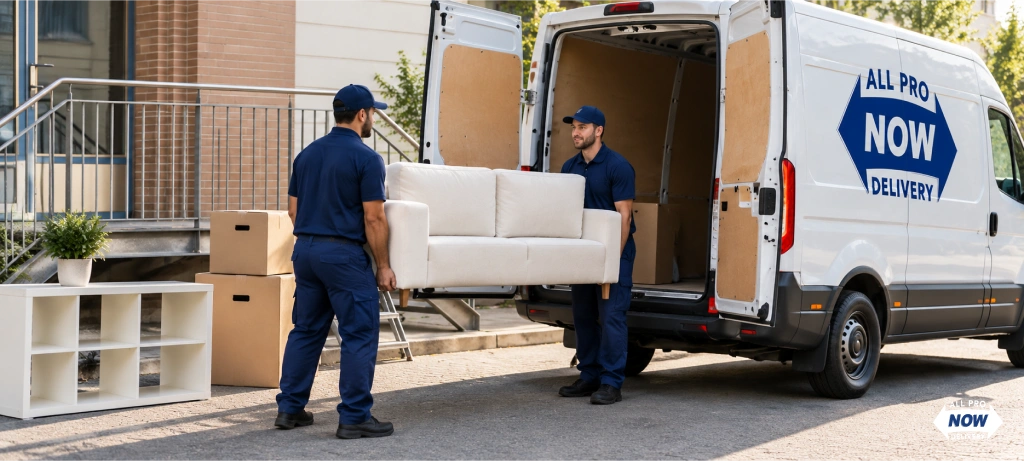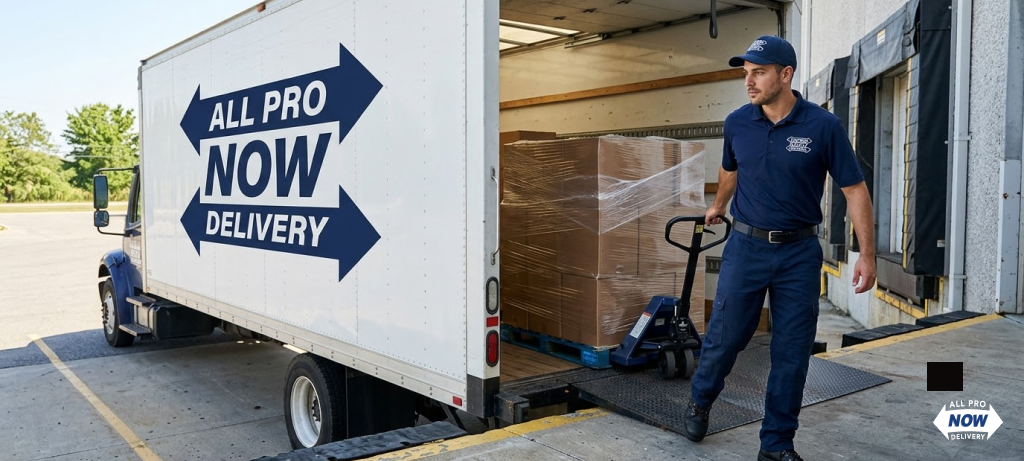
Picking a carrier feels simple until a pallet shows up late or a surprise surcharge eats your margin. At All Pro Now, we’ve spent more than 50 years in logistics moving freight across Ohio, Michigan, Pennsylvania, Indiana, Kentucky, and Florida.
That experience taught us one thing. The best shipping company is not one brand. It is the carrier that fits your package size, speed, budget, and lane.
This blog breaks down how USPS, UPS, FedEx, LTL carriers, and regional same-day fleets compare. You’ll get practical steps, realistic price ranges, and real-world feedback from sellers who ship every day.
Key Takeaways
- The best shipping company depends on weight, speed, and destination, not brand loyalty.
- USPS usually wins for small, light parcels under about 1–2 lbs.
- UPS and FedEx tend to win for heavier boxes, guaranteed transit, and international orders.
- LTL freight is the smart move for 150–10,000 lb shipments that don’t fill a full truck.
- Regional same-day carriers beat national networks for urgent B2B deliveries inside a metro or multi-state region.
- Hidden fuel surcharges and accessorial fees often matter more than the base rate.
The Numbers Behind U.S. Shipping in 2026
Choosing the best shipping company matters more every year. Federal data shows how fast shipping demand is growing and where freight actually moves.
Choosing the best shipping company matters more every year. Federal data shows how fast shipping demand is growing and where freight actually moves.
Start with online demand. U.S. retail e-commerce sales reached $340.2 billion in Q2 2026, up 12.2% year over year, according to the U.S. Census Bureau. Online orders now make up 17.1% of all retail sales. Every one of those orders needs a carrier.
Business freight tells a similar story. The Census Commodity Flow Survey found U.S. businesses shipped 12.2 billion tons of goods worth $18.0 trillion in 2022. Trucks hauled 68.1% of that tonnage. Even more telling, 56.4% of all tonnage traveled less than 50 miles.
That last number matters for your carrier choice. Most freight moves short distances by truck, which is exactly where regional carriers shine. And with more than 36 million small businesses in the U.S., per the SBA Office of Advocacy, competition for fast, affordable delivery is fierce. Florida alone is home to about 3.49 million of them.
Two trends stand out. Online orders keep growing about twice as fast as retail overall. And most freight travels short distances by truck, which is exactly where regional carriers shine.
What Makes the Best Shipping Company?
Every carrier markets itself as fast and reliable. The real test is how it performs on your shipments. Five factors decide it.
Package profile: Weight, dimensions, and fragility narrow your options fast. USPS caps parcels at 70 lbs. UPS and FedEx accept up to 150 lbs. Anything heavier moves as freight.
Speed and guarantees: Some carriers guarantee delivery dates and refund you when they miss. Others give estimates only. If your customer has a production line waiting, an estimate is not enough.
Total landed cost: The base rate is only the start. Fuel surcharges, residential fees, liftgate charges, and re-delivery fees can add 20% or more to the final invoice.
Tracking and accountability: Real-time GPS tracking, digital proof of delivery, and a real person to call protect you when something goes wrong.
Coverage: A national carrier reaches everywhere. A regional carrier often reaches your key lanes faster and cheaper.
USPS vs. UPS vs. FedEx: Who Wins Where?
The big three all ship millions of packages daily. Each has a sweet spot.
| Carrier type | Best for | Max weight | Typical speed | Watch out for |
| USPS | Small, light parcels and mailers | 70 lbs | 1–5 business days | Missed acceptance scans at drop-off |
| UPS | Heavier boxes, guaranteed ground and air | 150 lbs | 1–5 business days | Residential and fuel surcharges |
| FedEx | Express, time-definite, and international | 150 lbs | Overnight to 5 days | Premium pricing for speed |
| LTL freight | 1–6 pallets, about 150–10,000 lbs | Varies by carrier | 1–5+ business days | Fuel surcharges and accessorial fees |
| Regional same-day | Urgent B2B loads within a region | Up to 10,000 lbs by box truck | Same day | Limited to the carrier’s service area |
Transit times are typical ranges, not guarantees. Always confirm service levels for your specific lane.
USPS: Best for Small, Lightweight Parcels
USPS is often the cheapest shipping rates option for anything that fits in a bubble mailer. Ground Advantage parcels under a pound commonly run in the single digits. Priority Mail flat rate boxes simplify pricing for dense items.
Sellers on Reddit’s r/EtsySellers echo this. One seller reported shipping over 2,000 bubble mailers through USPS with just one truly lost package. Others praised free package pickup and free Priority Mail boxes. The common warning? Always get an acceptance scan at drop-off, or tracking can look broken.
UPS: Best for Heavier Boxes and Guaranteed Delivery
UPS shines once boxes get heavy or bulky. Its ground network is predictable, and guaranteed next-day air options are dependable. Many small businesses compare USPS and UPS Ground on discount platforms and find UPS cheaper above roughly 3–5 lbs.
Volume matters, too. Shippers who send many packages daily often negotiate meaningful discounts with a UPS account rep.
FedEx: Best for Express and International Orders
FedEx built its name on overnight service. It offers time-definite options, including early-morning delivery in many markets. It also ranks among the best international shipping companies for speed and customs support. DHL is another strong contender for overseas parcels.
For the cheapest international shipping, though, USPS international services or discounted multi-carrier platforms often cost less. You trade some speed and tracking detail for savings.
Shipping for Small Business: A Practical Playbook
Small businesses don’t need a logistics department to ship smart. They need a repeatable process. Here is a simple one, and our guide to the best freight carriers for small businesses goes deeper.
- Sort your products by weight band. Group items into under 1 lb, 1–5 lbs, 5–70 lbs, and freight. Each band usually has a different winner.
- Rate-shop every shipment. Use a multi-carrier tool or your marketplace label tool. Comparing carriers per order is how most sellers find the best shipping rates.
- Use free supplies. USPS and UPS both offer free branded packaging for certain services. That can save a few hundred dollars a year.
- Protect high-value orders. Most carriers include about $100 of coverage on many services. Buy extra insurance on anything pricier, and photograph packaging before it ships.
- Review invoices monthly. Look for fuel surcharges, address correction fees, and residential charges you didn’t expect.
This approach works whether you sell candles in Tampa or machine parts in Toledo.
When Freight Beats Parcel: Finding the Best Freight Shipping
Once shipments pass 150 lbs or move on pallets, parcel carriers stop making sense. That’s where less-than-truckload (LTL) freight comes in.
With LTL freight, you pay for the space your skids use, not a full trailer. It’s ideal for manufacturers, distributors, and construction suppliers moving a few pallets at a time. Typical LTL shipments range from about 150 to 10,000 lbs.
The catch is the national LTL fee structure. Big carriers often add fuel surcharges between 18% and 50% that shift quarterly. Liftgate, inside delivery, and limited-access fees stack on top. Transit can also stretch as freight hops between terminals, as our breakdown of how long freight shipping takes explains.
The best freight shipping partner keeps pricing fixed and freight handling minimal. Fewer touches mean fewer damage claims.
Why Regional Carriers Often Beat the Big Names
National networks are built for reach, not urgency. A box going from Cleveland to Columbus may still route through a distant hub. That adds a day or more.
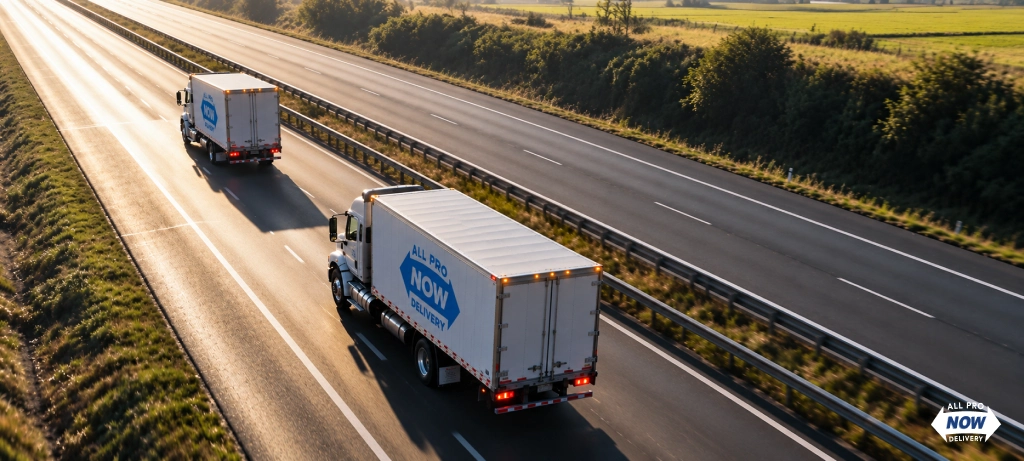
Regional carriers run direct routes. A driver picks up your freight and drives it to the dock. There is no sorting facility in between. For time-critical B2B delivery, that often makes a regional fleet the best shipping company in its corridor.
Here’s how that plays out across the areas we serve:
| Region | Key cities | Who ships here most |
| Ohio | Cleveland, Akron, Canton, Youngstown, Columbus, Toledo | Manufacturers and distributors moving parts between plants and stores |
| Michigan | Detroit, Grand Rapids | Automotive and industrial suppliers sending line-down parts |
| Pennsylvania | Pittsburgh and Western Pennsylvania | Construction firms supplying job sites on tight schedules |
| Indiana and Northern Kentucky | Cities along the I-75 and I-71 corridors | Distributors covering cross-state lanes |
| Florida | Key metros statewide | Retailers and medical suppliers needing reliable regional coverage |
Shippers often search for the best shipping company near California or Texas, too. The same rules apply there. Rate-shop parcels nationally, then look for a strong regional carrier on your busiest lanes.
Industries That Need More Than a Parcel Label
Some industries can’t afford a “delivered, maybe tomorrow” estimate. They need named drivers, real-time tracking, and proof of delivery.
- Manufacturing: Line-down parts, tooling, and raw materials between plants and suppliers.
- Medical and healthcare: Equipment and supplies that need careful handling and a documented chain of custody, often through dedicated medical courier services.
- Construction: Fixtures, tools, and materials delivered straight to job sites.
- Retail and e-commerce: Store replenishment and large-item deliveries like furniture or appliances.
For these shippers, the best shipping company is the one that answers the phone and shows up on time.
How All Pro Now Fits Into Your Shipping Mix
We don’t replace USPS for your 8-ounce mailers. That wouldn’t make sense. We step in when speed, size, or accountability matter most.
All Pro Now runs same-day delivery, courier, parcel, LTL, and expedited freight across our multi-state region. We operate our own fleet, so there are no brokers handing off your load. Our Sprinter vans carry up to 3,600 lbs, about four skids. Our 26-foot box trucks carry up to 10,000 lbs, about twelve skids.
A few proof points matter here:
- More than 100,000 shipments delivered.
- A 99% on-time delivery rate.
- Fuel surcharges of 0–7%, fixed annually, versus an industry range of roughly 18–50%.
- Live GPS tracking and digital proof of delivery on every load.
- The 2025 Acuity Insurance Outstanding Safety Performance Award.
- U.S. DOT 3463495 and MC 1131330 registration.
Actual rates vary by lane, weight, and timing. You can get a ZIP-to-ZIP estimate in seconds on our site.
Red Flags When Choosing a Carrier
No carrier is perfect. Still, some warning signs deserve attention before you sign on.
- Vague quotes. If accessorial fees aren’t listed upfront, expect them on the invoice.
- Fuel surcharges that change weekly. You can’t budget around a moving target.
- No dedicated contact. A call center with no accountability slows down every claim.
- Weak tracking. “In transit” for three days tells you nothing.
- Brokered loads. Each handoff adds risk and blurs responsibility.
As one longtime seller put it, every major carrier can make mistakes, but most don’t. Your goal is to pick partners who own the problem when they do.
Final Thoughts: Choose the Best Shipping Company for Each Job
The best shipping company for your business is usually a small team of carriers. Use USPS for light parcels. Lean on UPS or FedEx for heavy boxes, guaranteed air, and international orders. Bring in a regional fleet for urgent, palletized, or high-stakes deliveries.
If you ship across Ohio, Michigan, Pennsylvania, Indiana, Northern Kentucky, or Florida, All Pro Now can handle the loads that can’t wait. Get an instant quote and see why shippers call us the best shipping company for same-day and LTL freight in the region.