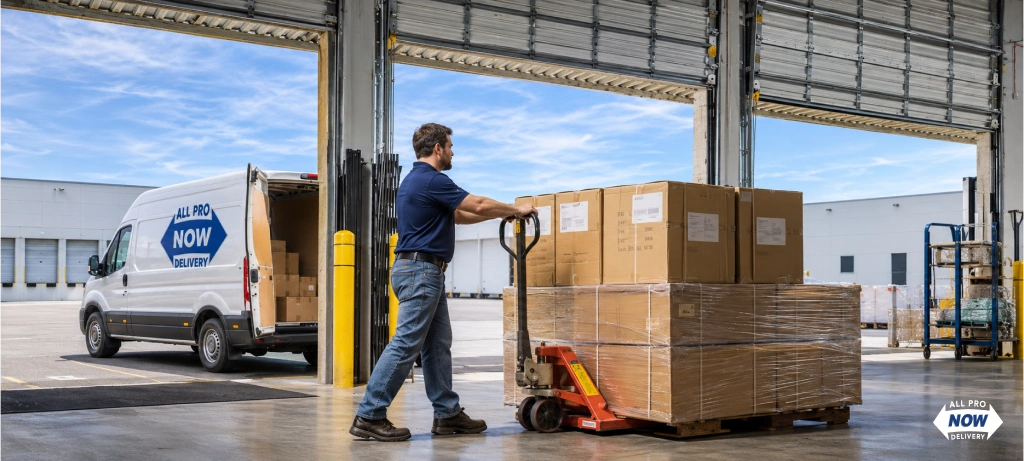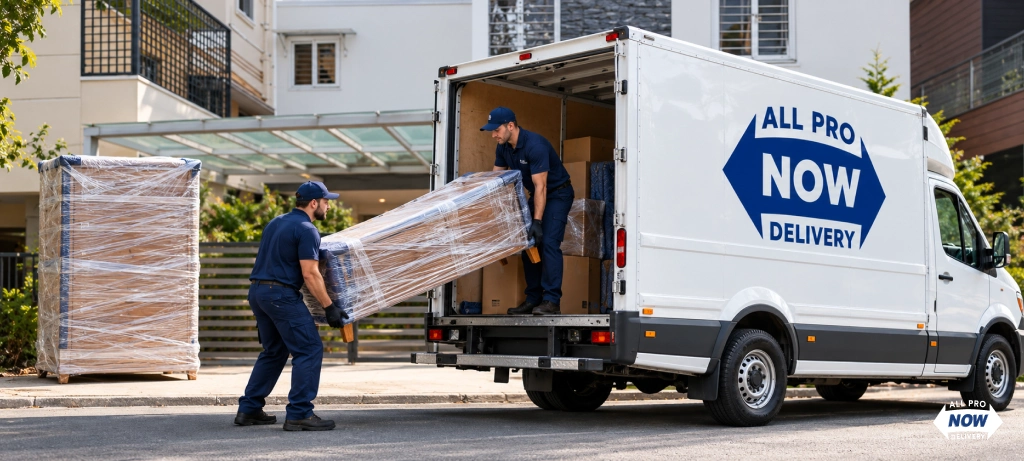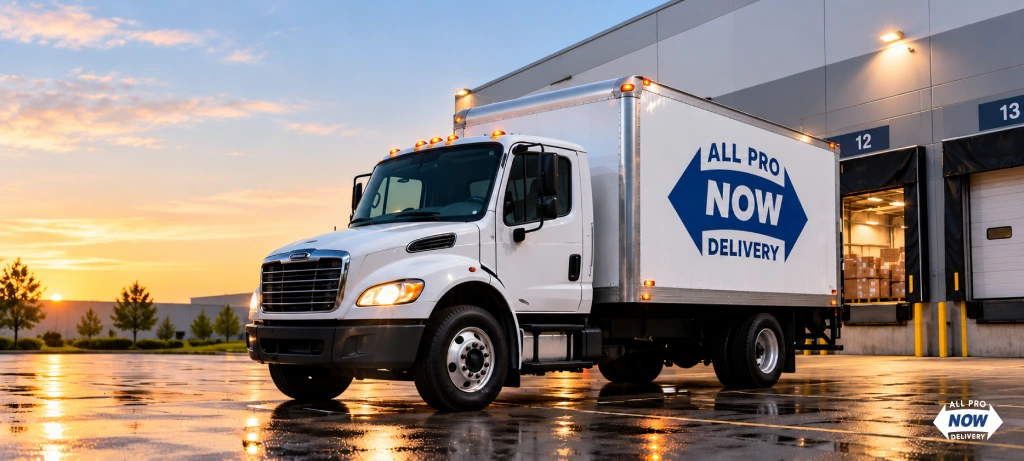
Every package, pallet, and rush delivery has one thing in common: someone has to physically move it. At AllProNow, we handle that step every day for businesses across Ohio, Michigan, Pennsylvania, Indiana, Kentucky, and Florida. So when customers ask, “What is a shipping carrier, and why does it matter?” we answer from the loading dock, not the textbook.
Whether you run an e-commerce store in Columbus or a parts plant outside Detroit, your carrier choice shapes your costs, delivery times, and customer reviews. This guide explains what a shipping carrier is, how carriers differ, and how to choose one that fits your freight.
Key Takeaways
- A shipping carrier is the company that physically moves goods from pickup to delivery by truck, van, plane, rail, or ship.
- Trucks dominate U.S. freight. They moved about 72.7% of all freight tonnage in 2024, according to the American Trucking Associations.
- Carriers come in local, regional, national, and international types. Regional carriers often beat national ones on price and speed for shorter lanes.
- The shipper sends the goods, the carrier moves them, and the consignee receives them.
- LTL (less-than-truckload) freight lets you share trailer space and pay only for what you use.
- The cheapest carrier depends on weight, size, distance, and speed. Surcharges matter as much as base rates.
What Is a Shipping Carrier? The Simple Definition
So, what is a shipping carrier? It’s a company that transports goods from one location to another for a fee. Carriers own or operate the vehicles, employ the drivers, and take legal responsibility for freight while it’s in their hands.
Well-known examples include FedEx, UPS, USPS, and DHL. But the carrier world is far bigger than the “big three.” Thousands of regional fleets, courier services, and LTL operators move a huge share of America’s freight daily.
Trucking carries most of that load. The American Trucking Associations reports that trucking made up 72.7% of freight tonnage and 76.9% of freight revenue in 2024, per its Freight Transportation Forecast. ATA also projects total truck tonnage will climb from roughly 11.27 billion tons in 2024 to 13.99 billion tons by 2035.
Online shopping keeps raising the stakes. According to the U.S. Census Bureau’s Quarterly Retail E-Commerce Sales report, online retail sales hit $340.2 billion in Q2 2026, equal to 17.1% of total U.S. retail sales (Census Bureau; FRED data). Every one of those orders needs a carrier.
Want the nuance between carriers and couriers? See our guide on carrier vs. courier.
Types of Shipping Carriers
Not all carriers do the same job. Matching your freight to the right category is the first step toward lower costs.
Local Carriers and Couriers
Local carriers handle deliveries within a city or metro area. Think a same-day courier run across Cleveland or a rush part from Akron to Canton. They shine when speed matters more than distance.
Regional Carriers
Regional carriers cover a group of states. A fleet running daily lanes between Cleveland, Columbus, Detroit, and Pittsburgh is a classic example. Regional freight often skips distant hub transfers, so it moves faster with fewer touches.
National Carriers
National carriers like UPS, FedEx, and USPS ship across the entire country. They offer broad coverage and solid tracking. The trade-off is often more surcharges and less flexibility.
International Carriers and Shipping Lines
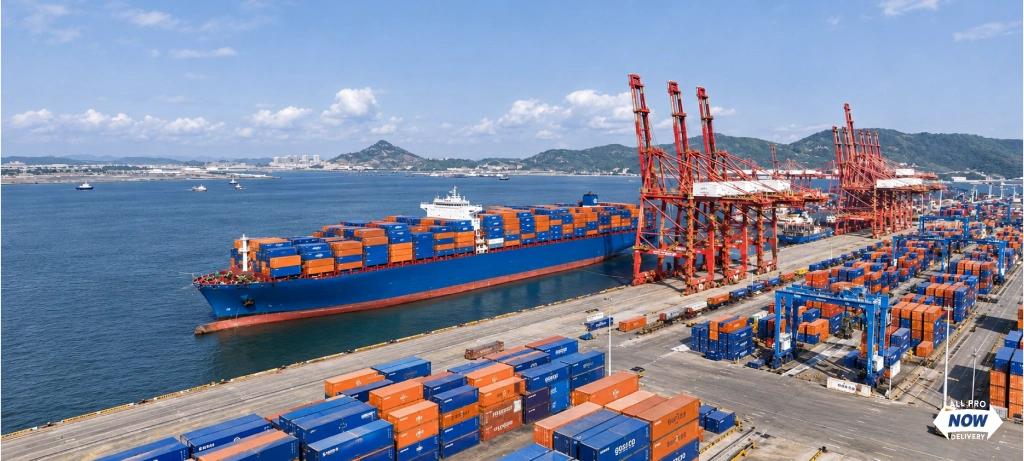
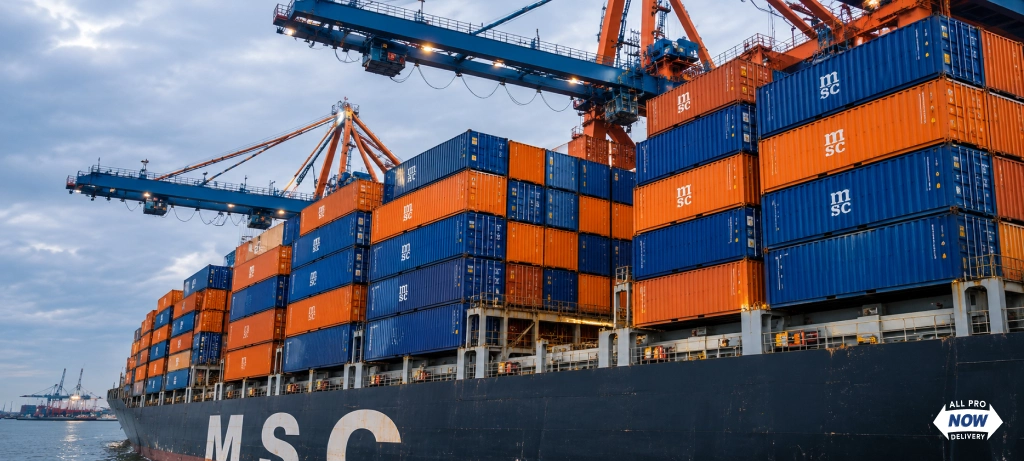
International carriers move goods across borders by air or ocean. Ocean carriers are called shipping lines, such as Maersk or MSC. They own the vessels, while freight forwarders book space on them.
Specialty Carriers
Some carriers focus on temperature-controlled goods, hazmat, oversized loads, or white-glove service. Clinics, labs, and job sites often rely on these specialists.
| Carrier Type | Typical Coverage | Best For |
| Local / Courier | One city or metro | Same-day, rush, documents, parts |
| Regional | Multi-state region | LTL, B2B replenishment, next-day |
| National | Entire U.S. | Parcels, coast-to-coast shipping |
| International / Shipping Line | Global | Imports, exports, ocean containers |
| Specialty | Varies | Medical, hazmat, oversized, white-glove |
Shipper vs. Carrier vs. Consignee vs. Freight Forwarder
These roles get mixed up constantly, even among seasoned buyers. Here’s how they fit together.
The shipper is the party sending the goods. That might be a manufacturer in Toledo shipping fittings to a distributor. The shipper prepares, packages, and arranges transport.
The carrier physically moves the goods. It owns the trucks, vans, planes, or vessels and is legally responsible during transit.
The consignee receives the goods. It could be a store, job site, hospital, or homeowner.
A freight forwarder or broker arranges shipping but usually doesn’t own vehicles. That middle layer can add value, but it can also add cost and blur accountability. Learn more in our breakdown of freight brokerage companies.
| Role | What They Do | Owns Vehicles? | Listed on Bill of Lading? |
| Shipper | Sends and prepares the freight | Usually no | Yes, as sender |
| Carrier | Physically transports the freight | Yes | Yes, signs to accept freight |
| Consignee | Receives the freight | No | Yes, as receiver |
| Freight Forwarder / Broker | Arranges transport between parties | Usually no | Sometimes, as agent |
Who Is the Carrier and Shipper on a Bill of Lading?
The bill of lading (BOL) is the legal document for a freight shipment. It acts as a receipt, a contract, and a title document. The shipper is listed as sender, the consignee as receiver, and the carrier signs to accept and move the freight.
Always confirm the carrier name on your BOL matches the company you hired. If a broker re-brokers your load, a different fleet may arrive. That’s a common cause of delays and damage disputes. Pair your BOL with a digital proof of delivery to close the paper trail.
What Is LTL Freight?
If you ship pallets, LTL matters. So, what does LTL freight stand for? LTL means less-than-truckload.
LTL freight is a shipment too big for parcel but too small to fill a full trailer. It typically ranges from about 150 to 10,000 pounds, or roughly one to twelve pallets. Multiple shippers share truck space, and each pays only for its portion. Our full guide on what LTL freight is goes deeper.
What Is an LTL Carrier?
An LTL carrier is a shipping carrier that specializes in consolidating partial loads. Traditional national LTL carriers route freight through multiple terminals. More handling means more chances for damage and delay.
Regional LTL carriers using sprinter vans and box trucks can often move freight more directly. Fewer touches usually mean less damage and faster transit within a few hundred miles. Compare options in our roundup of the best LTL carriers.
When LTL Makes Sense
LTL is a strong fit when you ship palletized goods above parcel limits, usually 150 pounds per box. It also works when you can’t fill a 53-foot trailer or need cost-efficient B2B replenishment. A building-supply distributor in Pittsburgh sending four skids to a contractor in Youngstown is a textbook LTL move.
What Is OnTrac Shipping?
OnTrac is a regional parcel carrier that started on the West Coast. After merging with LaserShip in 2024, it expanded coverage across much of the U.S. It focuses mainly on residential e-commerce deliveries.
OnTrac shows why alternative carriers matter. Large online sellers use them to cut costs and reduce reliance on UPS and FedEx. The takeaway: a lesser-known carrier can be the smarter pick for specific lanes.
What Is the Cheapest Shipping Service?
There’s no single cheapest carrier. The lowest price depends on your package, lane, and deadline.
| Shipment Type | Often Cheapest Option | Watch Out For |
| Small, light parcel (under 1 lb) | USPS Ground Advantage | Slower transit on long routes |
| Heavy but compact item | USPS Priority Mail Flat Rate | Size limits on flat-rate boxes |
| Mid-weight parcel, national route | UPS Ground or FedEx Ground | Residential and fuel surcharges |
| Pallets within a region | Regional LTL or same-day carrier | Liftgate and accessorial fees |
| Urgent local delivery | Local courier | Premium pricing for rush service |
Base rates tell only half the story. National carriers’ fuel surcharges commonly run 18% to 50%, plus residential, liftgate, and delivery-area fees. Those extras can push a “cheap” quote above a competitor’s all-in price. Our explainer on how fuel surcharges are calculated shows where the money goes.
Always compare landed cost, not the sticker rate. For online sellers, our guide to e-commerce shipping costs breaks down the full picture.
How to Choose the Right Shipping Carrier
Picking a carrier isn’t only about the lowest rate. Use these steps to make a confident decision.
1. Define Your Shipment Profile
Start with weight, size, and volume. Are you shipping to homes, businesses, or PO boxes? Do you need weekend pickups? Your answers narrow the field fast.
2. Match Coverage to Your Lanes
If most freight moves between Cleveland, Columbus, Detroit, and Pittsburgh, a coast-to-coast network may be overkill. A regional fleet with daily routes in those markets can deliver faster at lower cost.
3. Check Tracking and Visibility
Look for live GPS, accurate ETAs, and digital proof of delivery. Customers expect updates, and your team needs them to plan. See how package tracking should work in 2026.
4. Compare Total Costs, Including Returns
Factor in surcharges, insurance, and claims handling. E-commerce sellers should budget for returns too, which can nearly double effective shipping costs.
5. Verify Credentials
Every U.S. interstate carrier needs a USDOT number, and for-hire carriers typically need an MC number. Verify both on the FMCSA SAFER system. It takes two minutes and protects you from fraud.
6. Ask: Asset-Based or Broker?
Asset-based carriers own their trucks and employ their drivers. Brokers outsource the move. Asset-based carriers usually offer tighter accountability, since the company you hire hauls your freight.
7. Hold Carriers Accountable
Track on-time performance, damage rates, and invoice accuracy. A quarterly freight audit shows which carriers keep their promises. A transportation management system (TMS) makes this far easier.
Industries That Depend on the Right Carrier
Carrier choice hits some industries harder than others:
- Manufacturing: Plants in Ohio and Michigan need parts on time to avoid costly line shutdowns.
- Medical and healthcare: Labs and clinics need fast, documented delivery. See our guide to medical delivery services.
- Construction: Job sites from Northern Kentucky to Western Pennsylvania need materials at non-standard addresses.
- Retail and e-commerce: Sellers in Florida and Indiana compete on speed and accurate tracking.
In each case, the wrong carrier means downtime, lost sales, or frustrated customers.
How AllProNow Fits In
AllProNow is an asset-based carrier (USDOT 3463495, MC 1131330) with more than 50 years of combined logistics experience. We own our fleet, so your freight is never handed to an unknown broker. Our team was recognized with the 2025 Acuity Insurance Outstanding Safety Performance Award.
For LTL and same-day freight, we run sprinter vans carrying up to 3,600 pounds (about four skids). Our 26-foot box trucks haul up to 10,000 pounds (about 12 skids).
We cover Northeast Ohio, Columbus, Toledo, Akron/Canton, Youngstown, Detroit, and Pittsburgh. We also serve Indiana, Michigan, Western Pennsylvania, Northern Kentucky, and Florida. View our full service area and vehicle capacity.
Our fuel surcharges typically run 0–7%, fixed annually, and shown upfront. Actual rates vary by lane, weight, and timing. Every shipment includes live tracking and digital proof of delivery.
Conclusion: What Is a Shipping Carrier Worth to Your Business?
So, what is a shipping carrier? It’s the partner that turns your promise to customers into a delivered reality. The right one controls costs, protects freight, and keeps customers coming back.
Don’t default to the biggest name. Compare landed costs, verify credentials, and match coverage to your real lanes. For regional LTL and same-day freight across the Midwest and Florida, a dedicated regional carrier often delivers the best mix of speed, price, and accountability.
Ready to see how your lanes compare? Get a freight quote from AllProNow and find out what a shipping carrier with its own fleet can do for your business.