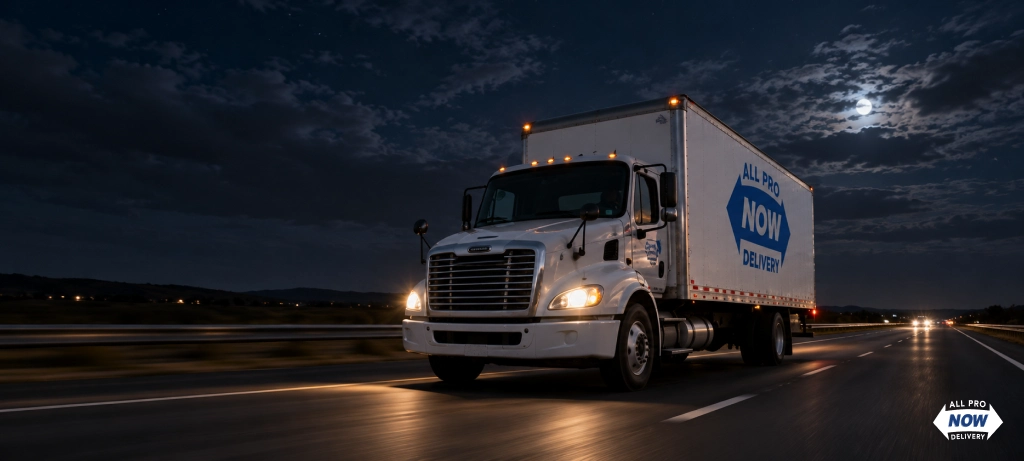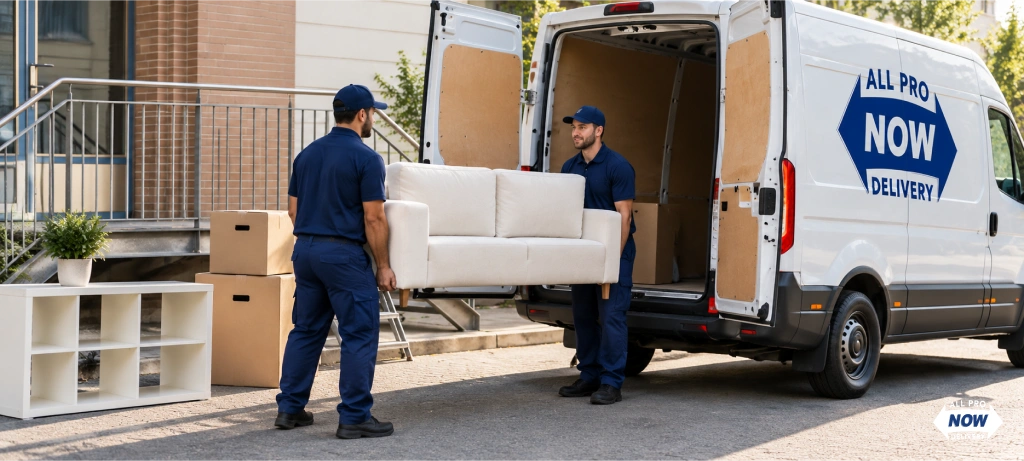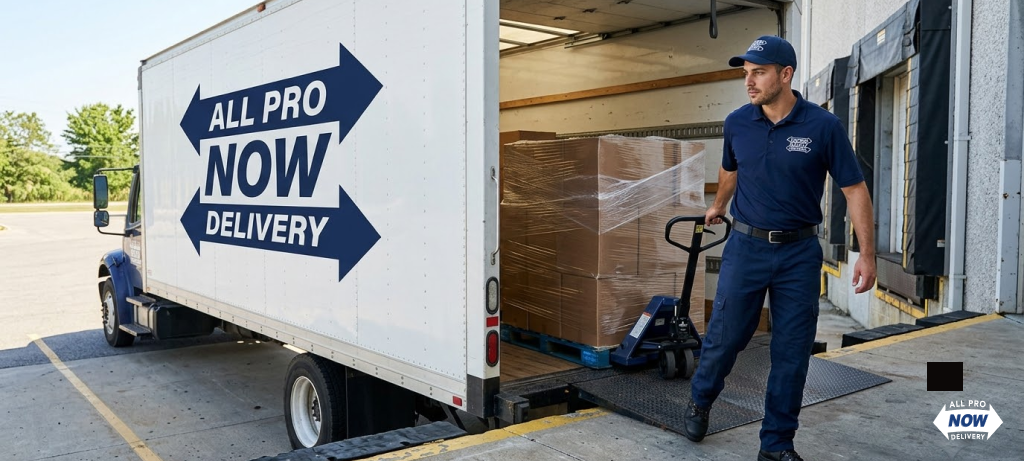

Retail last mile delivery refers to the final step of getting products from distribution centers to customers’ doorsteps. This phase determines whether online shoppers receive orders on time or experience frustration with delays. For retailers competing with Amazon’s delivery standards, mastering this process matters enormously.
The global last mile delivery market reached $201 billion in 2025 and projects 12% annual growth through 2029. Consumer expectations drive this expansion. Amazon’s average delivery time sits under two days nationwide—more than twice as fast as industry averages. Retailers without competitive delivery speeds lose customers in categories like grocery and health products where timing matters most.
All Pro Now provides retail last mile delivery across Ohio and Florida, serving retailers in Cleveland, Columbus, Toledo, Tampa, Miami, and Orlando. Our same-day delivery and courier services help businesses meet customer expectations without building their own delivery infrastructure. We handle the final mile so retailers can focus on selling products.
This guide explains how retail last mile delivery works, what makes it expensive, and practical approaches retailers use to balance speed with costs.
Understanding Retail Last Mile Delivery
Last mile delivery encompasses everything between a warehouse or distribution center and the customer’s address. Despite the name, this “mile” often covers 5-50 miles depending on warehouse locations and customer geography.
The process starts when warehouse workers pick and pack customer orders. These orders get loaded onto delivery vehicles—owned fleets, third-party carriers, or courier services. Drivers follow optimized routes making multiple stops. Customers receive packages at their homes, offices, or designated pickup locations.
This final delivery stage represents 53% of total shipping costs. The expense comes from delivering individual packages across dispersed residential addresses rather than bulk shipments to commercial locations. Each residential stop requires specific timing, navigation through neighborhoods, and personal handoff or secure placement.
Why Retail Last Mile Costs So Much
Several factors drive last mile expenses higher than other logistics phases. Residential deliveries spread across large geographic areas reduce stop density. A delivery truck might cover 40 miles completing 30 residential deliveries. Commercial deliveries concentrate stops—the same truck could make 30 deliveries within 10 miles at business parks.
Labor costs accumulate quickly. Drivers spend time navigating residential streets, finding specific addresses, waiting for customers, and handling delivery exceptions like access codes or secure placement requirements. These activities don’t exist with commercial freight deliveries to loading docks.
Failed delivery attempts double costs. When customers aren’t home or addresses prove incorrect, packages return to distribution centers for redelivery attempts. Studies show 24% of consumers consider same-day shipping crucial, while 28% prioritize next-day delivery. Meeting these expectations requires expensive infrastructure.
Current Market Size and Growth
The retail last mile delivery sector experiences rapid expansion driven by e-commerce growth. Over 20% of purchases now happen online compared to 17.8% in 2021. Same-day delivery and last mile logistics in North America will grow by $62.71 billion between 2023-2027.
Businesses spend approximately $10.10 per order on last mile delivery. For retailers shipping thousands of orders monthly, these costs reach hundreds of thousands annually. Companies that fail to optimize this process can experience profit declines by 26% over three years.
How Retailers Approach Last Mile Delivery
Different retailers use different strategies based on their size, geography, and customer base. Large national retailers invest billions in proprietary delivery networks. Smaller retailers partner with third-party logistics providers or regional courier services.
In-House Delivery Networks
Amazon, Walmart, and Costco own and operate extensive delivery fleets. Amazon invested $4 billion to expand rural delivery networks. Costco now handles 85% of US e-commerce shipments internally. These investments give retailers complete control over delivery timing, customer experience, and capacity during peak seasons.
Building in-house networks requires massive capital. Walmart invested heavily in automation throughout fulfillment networks to improve speed and efficiency. Their e-commerce business accounts for over 10% of US online sales. The infrastructure includes vehicles, drivers, distribution centers, routing technology, and management systems.
Third-Party Logistics Partners
Most retailers lack resources for proprietary delivery networks. They work with established carriers like FedEx, UPS, USPS, or regional delivery services. This approach provides flexibility without capital investment. Retailers pay per shipment rather than maintaining fixed fleet costs.
Third-party logistics offers scalability. During holiday peaks, retailers access additional capacity without hiring permanent staff or buying vehicles. Regional carriers often provide better service in specific markets. A Florida-focused carrier understands local geography, traffic patterns, and delivery requirements better than national providers spreading resources nationwide.
All Pro Now serves as a third-party delivery partner for retailers across Ohio and Florida. Businesses use our same-day delivery and courier services to meet customer commitments without managing their own fleets. We provide the infrastructure, drivers, and technology while retailers focus on merchandising and customer service.
Hybrid Delivery Models
Many retailers combine owned delivery for high-volume local routes with third-party partners for extended reach. This balances control with flexibility. A Tampa retailer might handle same-day delivery within 20 miles using owned vehicles while partnering with carriers for statewide coverage.
Hybrid approaches optimize costs. Owned fleets serve dense delivery zones economically. Third-party partners handle low-density areas where maintaining dedicated capacity proves expensive. The combination provides reliable local delivery with geographic flexibility.
Technology Enabling Retail Last Mile Delivery
Modern last mile delivery depends on sophisticated technology connecting warehouses, vehicles, drivers, and customers. Real-time routing, tracking, and communication systems coordinate thousands of daily deliveries.

Route Optimization Software
Route optimization analyzes delivery addresses, traffic conditions, delivery windows, and vehicle capacity. Algorithms calculate efficient routes considering multiple variables. A delivery truck serving 30 stops might have billions of possible route combinations. Software finds optimal sequences reducing miles driven and time spent.
Dynamic routing adjusts routes continuously as conditions change. Traffic jams trigger automatic rerouting. New orders added mid-day get inserted into existing routes at optimal locations. Delivery windows constrain timing—medical supplies needed by 2 PM get prioritized over general packages accepting 8 AM-8 PM windows.
AI-powered routing improves continuously through machine learning. Systems analyze historical delivery data, identifying patterns in traffic, delivery times, and successful delivery locations. Routes get smarter over time based on actual performance rather than theoretical calculations.
Real-Time Tracking Systems
GPS tracking shows vehicle locations in real-time. Customers monitor deliveries through tracking portals or mobile apps. Transparency reduces “where’s my order” calls to customer service. One study found real-time tracking visibility cuts customer inquiries by 60%.
Tracking benefits extend beyond customer communication. Dispatchers monitor fleet performance identifying delays before they cascade. If a driver falls behind schedule, additional vehicles can be deployed handling remaining stops. Warehouse managers see when vehicles depart and return coordinating loading operations.
All Pro Now provides complete tracking visibility for retail partners across Ohio and Florida. Customers receive tracking links when orders ship. Real-time updates show delivery progress. Digital proof of delivery confirms completion with photos and signatures.
Delivery Management Platforms
Delivery management platforms coordinate all last mile activities in unified dashboards. Order management, warehouse operations, fleet management, driver communication, and customer notifications flow through integrated systems.
These platforms eliminate manual coordination. When orders process in retail systems, delivery management receives automated notifications. Warehouse systems generate picking instructions. Completed picks trigger driver dispatch. Delivery completion updates inventory and customer accounts automatically.
Integration reduces errors from manual data entry. Order details flow directly from retail systems to delivery vehicles. Drivers see accurate addresses, special instructions, and customer contact information without dispatcher phone calls or paperwork exchanges.
Retail Categories and Last Mile Requirements
Different retail categories have unique last mile delivery requirements based on product characteristics and customer expectations. Grocery delivery differs substantially from furniture delivery or prescription medications.
Grocery and Food Delivery
Grocery delivery requires temperature control and tight timing windows. Perishable items can’t sit in vehicles for hours. Customers expect specific delivery windows—morning delivery for fresh ingredients needed for dinner preparation.
Retailers use refrigerated vehicles, insulated bags, and ice packs maintaining food safety. Delivery windows often span 1-2 hours rather than full-day ranges. Failed deliveries create waste—perishable groceries can’t simply be returned and redelivered the next day.
Apparel and General Merchandise
Clothing, electronics, home goods, and general merchandise represent the largest e-commerce category. These products accept wider delivery windows—same-day, next-day, or 3-5 business days depending on customer selection and retailer capability.
Return rates run 20-30% for online apparel purchases compared to 8.89% in physical stores. Customers order multiple sizes or colors, keeping items that fit and returning the rest. Retailers must manage reverse logistics efficiently processing returns, inspecting condition, and restocking inventory.
Furniture and Large Items
Furniture delivery involves special handling. Items exceed standard package dimensions requiring larger vehicles. Deliveries often need two-person teams for safe handling. Customers expect white glove service—delivery to specific rooms, assembly, and packaging removal.
Scheduling becomes complex. Customers need to be home for large deliveries. Access challenges arise with apartments requiring elevator reservations or narrow doorways limiting furniture size. Delivery windows must accommodate customer availability rather than pure routing efficiency.
Healthcare and Prescriptions
Prescription medications require secure delivery with identity verification. Controlled substances mandate signature confirmation. Temperature-sensitive medications need climate-controlled transportation. Timing matters—patients need medications by specific dates or face health consequences.
Retailers handle healthcare deliveries with specialized procedures. HIPAA compliance protects patient privacy. Chain of custody documentation tracks medication from pharmacy to patient. Delivery partners need training on regulatory requirements and handling procedures.
Regional Considerations for Ohio and Florida
Geography and climate affect retail last mile delivery differently across regions. Ohio’s manufacturing economy and winter weather create different challenges than Florida’s tourism patterns and hurricane seasons.
Ohio Retail Delivery Characteristics
Ohio’s urban density in Cleveland, Columbus, and Cincinnati enables efficient delivery routing. Multiple customers concentrate in relatively small geographic areas. Delivery trucks make frequent stops within compact zones.
Winter weather affects delivery schedules November through March. Snow slows traffic. Icy conditions make residential deliveries hazardous. Retailers build weather buffers into delivery promises—guaranteed delivery times extend during winter storms.
Manufacturing employment creates daytime residential delivery opportunities. Many Ohio workers commute to offices or factories leaving homes empty during standard delivery hours. Retailers offer evening delivery windows or secure placement options for packages delivered while customers work.
Florida Retail Delivery Characteristics
Florida’s geography stretches delivery distances. Miami to Jacksonville covers 350 miles. Retailers serving statewide markets manage longer distribution routes than concentrated urban markets.
Tourism seasonality affects delivery demand. Orlando, Tampa, and Miami Beach experience population surges during winter months and holiday periods. Retailers scale delivery capacity matching seasonal demand. Vacation rental deliveries require coordination with property managers rather than direct customer handoffs.
Hurricane season impacts delivery operations June through November. Retailers monitor weather forecasts triggering contingency plans when storms threaten. This includes securing inventory, communicating delivery delays to customers, and rerouting shipments away from affected areas.
Heat affects vehicle operations and package conditions. Electronics and temperature-sensitive products require climate control. Delivery vehicles sit in heat when making stops. Retailers use insulated packaging and limit vehicle exposure times for sensitive products.
Consumer Expectations Driving Retail Delivery
Customer expectations for delivery speed and convenience continue rising. Retailers unable to meet these standards lose customers to competitors offering superior delivery experiences.
Speed Expectations
Amazon conditioned consumers expecting fast delivery. Their Prime membership provides free two-day shipping to 200 million global members. Competitors match these speeds or lose market share. Some 68% of consumers expect free shipping on orders below $50.
Same-day delivery expands beyond major metros. Walgreens offers around-the-clock same-day delivery in many markets. Target expanded same-day delivery services broadly. Smaller retailers partner with delivery services offering same-day capability without building proprietary infrastructure.
All Pro Now enables Ohio and Florida retailers to offer same-day delivery without fleet investments. Our courier network covers major markets—Cleveland, Columbus, Toledo, Tampa, Miami, Orlando. Retailers submit orders through our platform. We handle pickup and delivery the same day.
Communication and Transparency
Customers demand delivery visibility. They want real-time tracking, delivery windows, and proactive notifications about delays. Silent delivery experiences where packages simply appear create anxiety and customer service calls.
Retailers providing accurate delivery windows outperform those offering vague estimates. “Delivery between 2-4 PM” satisfies customers better than “delivery sometime Tuesday.” Even when deliveries run late, proactive communication explaining delays and new timing reduces complaints.
Delivery confirmation reassures customers. Photo proof showing package placement at doorsteps verifies completion. Digital signatures for valuable items protect against disputed deliveries. These confirmations reduce “where’s my package” inquiries while providing evidence for delivery disputes.
Flexible Delivery Options
One delivery size doesn’t fit all customers. Some want packages left at doorsteps. Others prefer secure locker pickup. Commercial customers need deliveries during business hours. Residential customers want evening options.
Buy online, pick up in store (BOPIS) gained popularity during COVID-19 and continues growing. Customers order online avoiding shipping charges and delays. They pick up orders at retail locations on their schedule. This approach eliminates last mile delivery costs while driving foot traffic to stores.
Delivery lockers provide secure pickup locations. Retailers place packages in lockers at apartment complexes, office buildings, or public locations. Customers receive access codes retrieving packages when convenient. Lockers reduce failed deliveries from customers not being home.
Managing Retail Last Mile Delivery Costs
Last mile delivery expenses threaten retail margins. Companies implement various strategies controlling costs without sacrificing service quality.
Minimum Order Thresholds
Free delivery on all orders regardless of size creates unsustainable costs. Retailers set minimum order values for free delivery—$35, $50, or $75 depending on margin structure. This encourages larger basket sizes covering delivery costs.
Delivery fees below minimums offset costs. A $5.99 delivery fee on small orders makes customers consider whether convenience justifies the charge. Many add items reaching free delivery thresholds rather than paying fees.
Delivery Speed Tiers
Not all orders need same-day delivery. Retailers offer tiered options—same-day premium, next-day standard, 3-5 day economy. Customers self-select based on urgency and willingness to pay. Urgent orders pay premium rates. Patient customers choose slower free options.
This segmentation lets retailers optimize delivery costs. Premium same-day orders justify dedicated vehicles and rush handling. Economy orders consolidate over days accumulating volume before shipment. The mix balances fast service for customers willing to pay with economical shipping for price-sensitive buyers.
Strategic Warehouse Placement
Distribution center locations dramatically affect last mile costs. Warehouses positioned near customer concentrations reduce delivery distances. A retailer serving Tampa and Orlando needs Florida warehouse space, not just Northeast distribution.
Micro-fulfillment centers bring inventory even closer to customers. Small warehouses in urban areas enable fast delivery with minimal transportation. They sacrifice economies of scale in warehouse operations for delivery efficiency. The tradeoff works in dense urban markets with high order volumes.
Delivery Window Management
Tight delivery windows cost more than flexible windows. Same-day 2-hour windows require dedicated vehicles and rush routing. Next-day 8-hour windows allow consolidation and efficient routing. Even longer windows enable maximum delivery optimization.
Retailers balance customer expectations with operational costs. Critical items like medical supplies warrant tight windows. General merchandise accepts broader ranges. Dynamic pricing charges premiums for narrow windows while incentivizing flexible timing with discounts.
Choosing Retail Last Mile Delivery Partners
Retailers selecting delivery partners evaluate capabilities matching their specific needs. National carriers, regional services, and specialty providers each offer distinct advantages.
Carrier Evaluation Criteria
Delivery reliability matters most. On-time delivery percentages indicate consistency. Retailers track performance metrics—percentage of deliveries completed within promised windows. Consistent 95%+ performance builds customer trust. Inconsistent 80% performance damages reputations.
Geographic coverage determines carrier suitability. Retailers serving specific regions need carriers with strong local presence. A Florida-focused retailer benefits more from carriers knowing Florida geography than national providers treating Florida as one among fifty states.
Technology integration capabilities affect operational efficiency. Retailers need carriers connecting to their order management systems. Manual order entry and tracking phone calls waste time and create errors. Automated integration through APIs streamlines operations.
Pricing transparency prevents surprise costs. Some carriers advertise low base rates then add fuel surcharges, residential delivery fees, and specialty handling charges. Total delivered cost matters more than quoted rates. All Pro Now provides upfront pricing including all standard service elements for Ohio and Florida deliveries.
Partnership vs. Transaction Relationships
Transactional carrier relationships optimize individual shipments without strategic alignment. Retailers shop rates shipment-by-shipment selecting lowest cost options. This approach minimizes per-package costs but sacrifices partnership benefits like priority capacity during peaks and coordinated problem-solving.
Partnership relationships create mutual commitments. Retailers provide volume visibility and consistent business. Carriers commit capacity, service standards, and responsive support. During crises—weather delays, demand surges, operational issues—partners collaborate solving problems rather than enforcing contract terms.
All Pro Now builds partnerships with Ohio and Florida retailers. We understand seasonal patterns, peak periods, and operational challenges. Our capacity planning accommodates retailer growth. Service issues receive priority attention rather than generic customer service queue treatment.
Future of Retail Last Mile Delivery
Technology and business model innovation continues reshaping retail last mile delivery. Emerging approaches promise improved efficiency and customer experience.
Electric Delivery Vehicles
Electric vehicles suit last mile delivery operations. Stop-and-go city driving recharges batteries through regenerative braking. Zero tailpipe emissions help retailers meet sustainability goals and comply with urban low-emission zones. Lower maintenance costs offset higher vehicle prices.
FedEx, UPS, and Amazon deploy thousands of electric delivery vehicles. Regional carriers follow suit as vehicle availability improves and charging infrastructure expands. Total cost of ownership favors electric vehicles in urban delivery applications with predictable routes and centralized charging.
Autonomous Delivery Technology
Self-driving delivery vehicles remain years from widespread deployment but pilot programs demonstrate potential. Autonomous vehicles operate 24/7 without driver labor costs. They follow optimal routes precisely without human variability.
Current autonomous programs focus on specific use cases—campus deliveries, retirement community service, geofenced urban zones. Broader deployment requires regulatory approval, technology maturation, and public acceptance. The timeline remains uncertain but directionally inevitable.
Drone Delivery Expansion
Drone delivery operates in limited markets with specific use cases. Walmart offers drone delivery in Arkansas, Florida, Georgia, North Carolina, and Texas with over 150,000 completed deliveries. Amazon develops Prime Air despite operational setbacks.
Drones excel at lightweight packages over short distances to accessible drop zones. They can’t handle heavy items, complex addresses, or secure handoffs. The technology supplements traditional delivery rather than replacing it. Specific applications—medical supplies to remote areas, urgent prescription delivery—justify drone deployment.
Delivery Robots and Lockers
Sidewalk delivery robots handle short-distance autonomous deliveries in controlled environments. College campuses, retirement communities, and dense urban neighborhoods deploy robots for contactless delivery. They operate at low speeds navigating sidewalks and crosswalks.
Smart locker networks expand providing secure package pickup locations. Retailers place lockers in apartment buildings, office complexes, transportation hubs, and retail locations. Customers retrieve packages using access codes when convenient. Lockers reduce failed deliveries and theft while lowering final handoff costs.
All Pro Now Retail Last Mile Delivery Services
Retailers across Ohio and Florida use All Pro Now for reliable last mile delivery without building their own infrastructure. Our same-day delivery and courier services handle final mile logistics while retailers focus on merchandising and customer service.

We serve major markets—Cleveland, Columbus, Toledo, Tampa, Miami, Orlando—with local drivers who know regional geography, traffic patterns, and delivery requirements. Orders submitted through our platform receive same-day delivery when needed or scheduled delivery matching customer preferences.
Our technology provides real-time tracking, automated customer notifications, and digital proof of delivery. Retailers access performance dashboards showing on-time delivery percentages, delivery times, and service metrics. Integration with retail order management systems eliminates manual data entry.
Pricing includes all standard services—residential delivery, signature confirmation when required, photo proof of delivery, and customer communication. No surprise fuel surcharges or hidden fees. Retailers see exact delivery costs before committing to service.
Capacity scales with retail demand. Holiday peaks, promotional events, and seasonal surges receive priority capacity planning. We adjust driver networks and vehicle availability matching retailer needs rather than rigid capacity constraints.
Ready to improve retail delivery performance? Visit AllProNow.net to get instant quotes, schedule deliveries, and learn how our last mile delivery services support retail operations across Ohio and Florida. Our instant price calculator provides transparent pricing for same-day delivery, courier services, and scheduled retail deliveries.